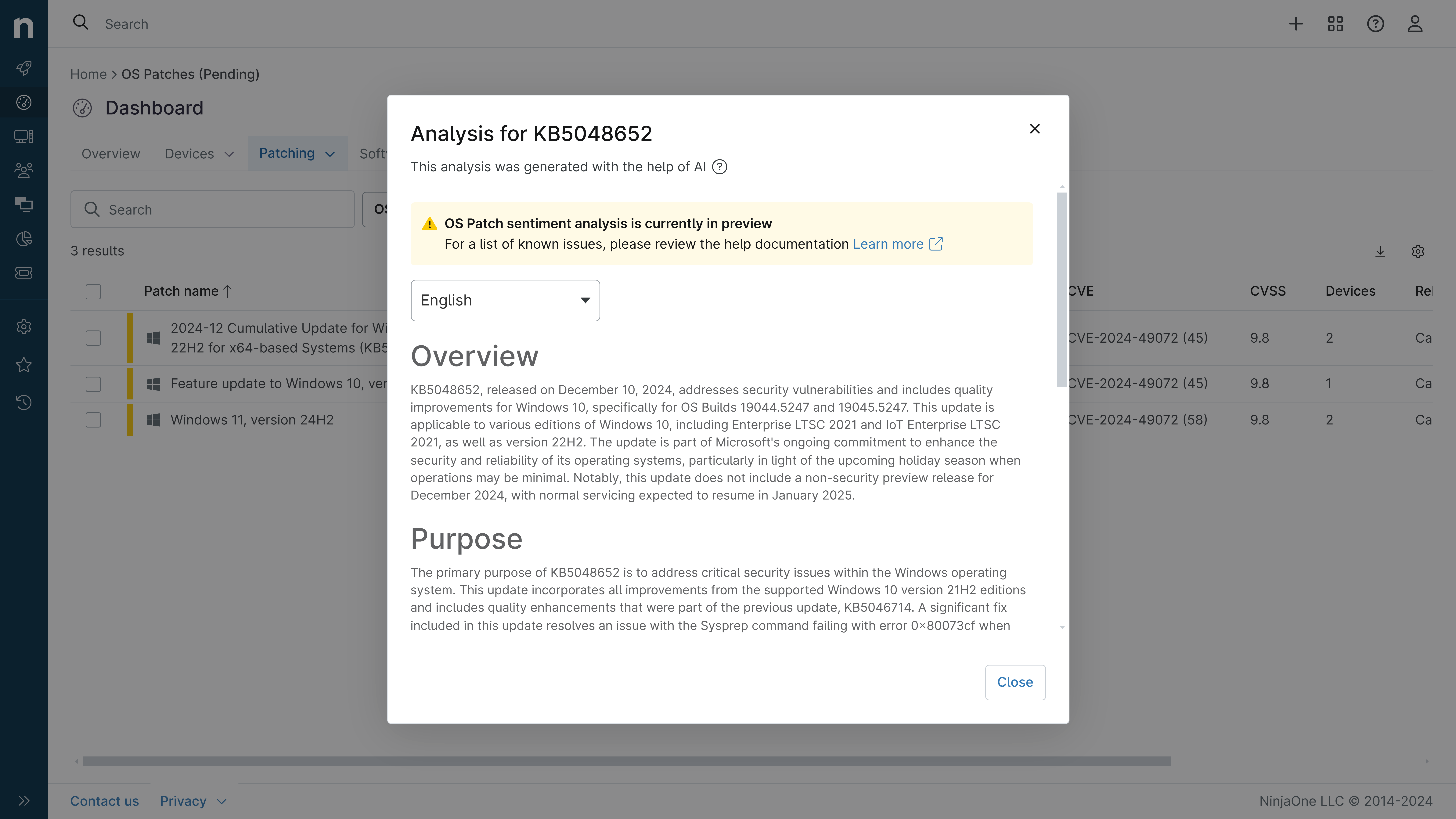
KB5082413: Overview with user sentiment and feedback
Last Updated May 30, 2026
Probability of successful installation and continued operation of the machine
Overview
KB5082413 is a cumulative security and reliability update for .NET Framework 3.5 and 4.7.2 released on April 14, 2026, targeting Windows 10 version 1809 and Windows Server 2019 systems. This update addresses multiple critical security vulnerabilities within the .NET Framework ecosystem, including a remote code execution flaw and several denial-of-service weaknesses that could potentially compromise system integrity and availability.
The update is distributed through standard Microsoft channels including Windows Update, Microsoft Update, Windows Update for Business, and the Microsoft Update Catalog. Microsoft recommends applying this update as part of regular maintenance routines to ensure systems remain protected against identified threats. The patch requires that either .NET Framework 3.5 or 4.7.2 be present on the target system, and a system restart is necessary following installation if any affected files are in active use.
General Purpose
This cumulative update delivers essential security enhancements to address six distinct vulnerabilities affecting .NET Framework implementations. The primary security concern addressed is CVE-2026-32178, a remote code execution vulnerability that could allow attackers to execute arbitrary code with elevated privileges. Additionally, the update mitigates three denial-of-service vulnerabilities (CVE-2026-32203, CVE-2026-32226, and CVE-2026-23666) that could render applications or services unresponsive. A security feature bypass vulnerability (CVE-2026-26171) and an information disclosure vulnerability (CVE-2026-33116) are also resolved. Beyond security fixes, the update includes quality improvements to .NET Runtime, specifically enhancing ClickOnce verification logic to support SHA384 and SHA512 cryptographic algorithms, improving compatibility with modern security standards.
General Sentiment
The sentiment surrounding this update is decidedly positive from a security perspective, as it addresses critical vulnerabilities without reported complications. Microsoft explicitly states no known issues exist following deployment, which is a favorable indicator for production environments. The update targets legacy but still widely-deployed framework versions, suggesting Microsoft remains committed to maintaining security posture across its extended support lifecycle products. However, potential concerns include the requirement for system restart and the recommendation to close all .NET Framework-based applications before installation, which could impact availability in environments with continuous operation requirements. The absence of user feedback or community discussion regarding this patch suggests either recent release status or minimal disruption during rollout, both of which are positive indicators. Organizations managing Windows 10 version 1809 and Windows Server 2019 infrastructure should view this update favorably as it provides essential security coverage without apparent trade-offs.
Known Issues
- No known issues reported by Microsoft at time of release
Disclaimer: We take measures to ensure that AI-generated content is of the highest possible quality, but we cannot guarantee its accuracy and recommend that users do their own independent research. Generated on 2026-05-30 01:29 PM