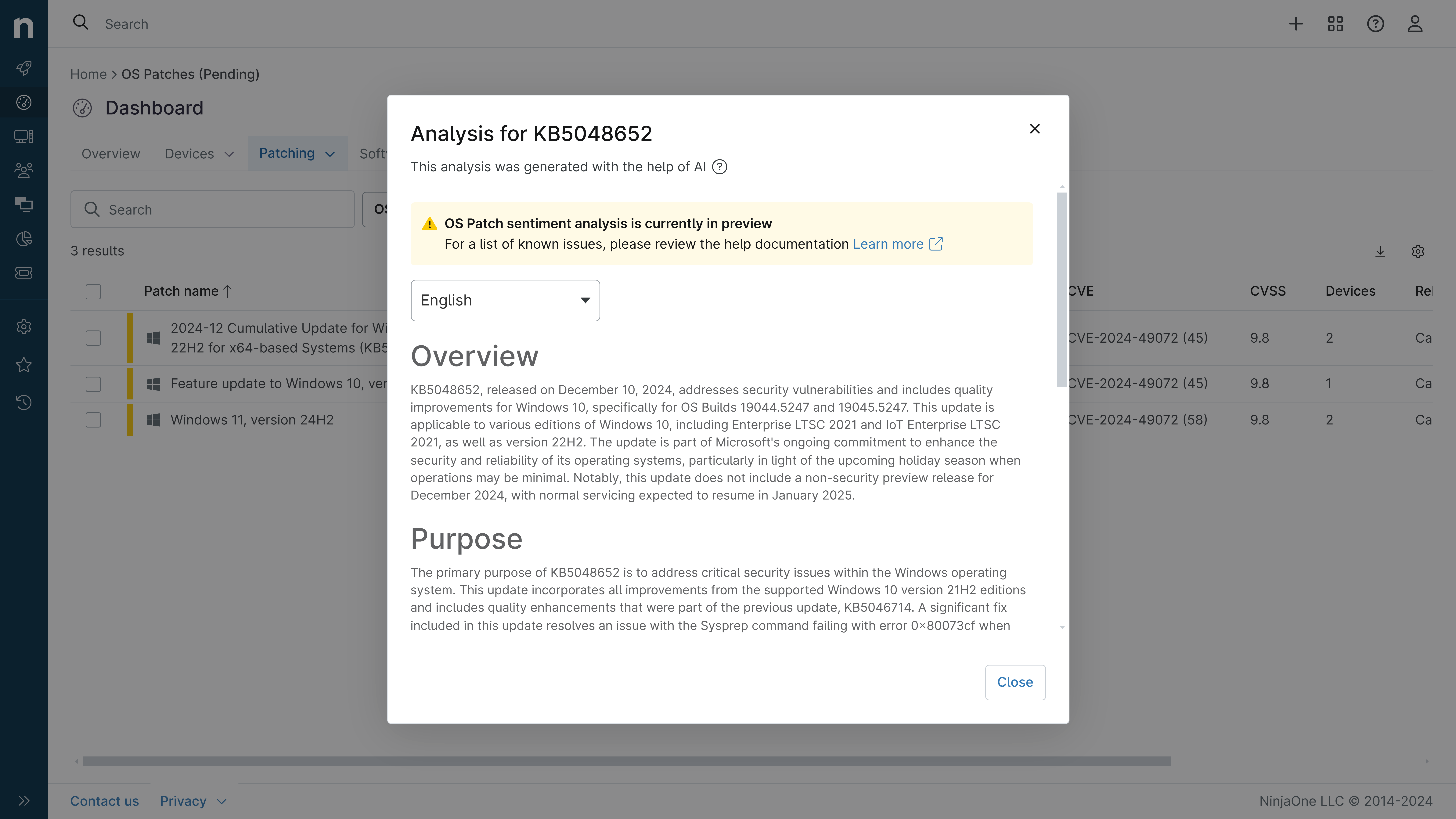
KB5073723: Overview with user sentiment and feedback
Last Updated February 28, 2026
Probability of successful installation and continued operation of the machine
Overview
This security update for Windows Server 2019 includes fixes and quality improvements that are part of the following updates:- December 9, 2025—KB5071544 (OS Build 17763.8146)- December 18, 2025—KB5074975 (OS Build 17763.8148)The update addresses several issues, including:- A security hardening behavior that restricts certain applications from autofilling credentials during remote support sessions or automated authentication workflows.- Removal of certain modem drivers that will cause modem hardware dependent on those drivers to no longer work in Windows.- An update to the Windows core component WinSqlite3.dll, which previously may have been detected as vulnerable by some security software.
General Purpose
This January 2026 cumulative update for Windows Server 2019 includes the following key changes and improvements:- Credentials Autofill: This update introduces a security hardening behavior that restricts certain applications from autofilling credentials during remote support sessions or automated authentication workflows. With this change, credential dialogs do not respond to virtual keyboard input from remote desktop or screen sharing tools/apps.- Windows Deployment Services (WDS): The update changes the default behavior of WDS to stop supporting hands-free deployment functionality. Administrators should review the guidance and follow the instructions provided in the 'Windows Deployment Services (WDS) Hands-Free Deployment Hardening Guidance'.- Drivers: This update removes the following modem drivers: agrsm64.sys (x64), agrsm.sys (x86), smserl64.sys (x64) and smserial.sys (x86). Modem hardware dependent on these specific drivers will no longer work in Windows.- WinSqlite3.dll: The Windows core component WinSqlite3.dll has been updated. Previously, some security software may have detected this component as vulnerable. Note that WinSqlite3.dll is separate from sqlite3.dll, which is found in application-specific directories and is not a Windows component.
General Sentiment
The overall sentiment around this January 2026 cumulative update for Windows Server 2019 is mixed. On the positive side, the update includes important security hardening and quality improvements, such as restricting credential autofill functionality and updating the vulnerable WinSqlite3.dll component.However, the update also introduces some potentially disruptive changes, such as the removal of certain modem drivers and the default disabling of hands-free deployment in Windows Deployment Services. These changes may impact some organizations and require additional configuration or workarounds.Additionally, the update has introduced a few known issues, including problems with Japanese character rendering in PowerShell, connection/authentication failures in Azure Virtual Desktop and Windows 365, and issues with shutting down or hibernating devices with Virtual Secure Mode enabled. While Microsoft has provided workarounds or indicated that future updates will resolve these problems, the presence of these known issues dampens the overall positive sentiment.Overall, the update appears to be a mixed bag - it includes important security and quality improvements, but also introduces some potentially disruptive changes and known issues that organizations will need to carefully evaluate and plan for before deployment.
Known Issues
- Japanese characters fail to render correctly in PowerShell: After installing this update, Japanese language installations of Windows Server 2019 may not correctly display Japanese characters in the PowerShell console. This is caused by an unintended change to PowerShell encoding settings.- Connection and authentication failures in Azure Virtual Desktop and Windows 365: After installing this security update, credential prompt failures occurred during Remote Desktop connections using the Windows App on Windows client devices, impacting Azure Virtual Desktop and Windows 365.- Apps might become unresponsive when saving files to cloud-based storage: After installing this update, some applications may become unresponsive or encounter unexpected errors when opening files from or saving files to cloud-based storage like OneDrive or Dropbox.- Some devices with Virtual Secure Mode enabled might fail to shut down or hibernate: After installing this update, some Secure Launch-capable PCs with Virtual Secure Mode (VSM) enabled are unable to shut down or enter hibernation, and instead restart.
Disclaimer: We take measures to ensure that AI-generated content is of the highest possible quality, but we cannot guarantee its accuracy and recommend that users do their own independent research. Generated on 2026-02-28 07:19 AM