Key Points
- Defining wireless network security: Wireless network security is a critical part of IT security, as more businesses and organizations increasingly adopt wireless technologies.
- Parts of network security: Critical parts of network security include encryption technologies such as WPA2/WPA3, authentication and access control, wireless network architecture and design, and relevant policies and procedures.
- Network security challenges: Wireless network security faces a wide and complex range of digital, physical, and analog threats (from unauthorized access and data interception to rogue access points, spoofing, side-channel attacks, and hardware vulnerabilities) requiring a holistic, multidisciplinary approach to defend against them effectively.
- Wireless network strategy: Best practices such as regular patch updates, strong encryption, separating network user groups, staff training, vigilant monitoring and operational analysis, and regulatory compliance help ensure that your business network remains secure.
As more businesses adopt wireless technology in their operations, the need for security measures against cyber threats and vulnerabilities becomes more critical. This article provides an overview of wireless network security principles and best practices for securing business networks.
What is wireless network security?
Wireless network security refers to the measures and protocols implemented to protect a wireless network and its data from unauthorized access and other cyber threats.
How does wireless security work?
Wireless networks secure data through encryption (such as WPA2/WPA3), user or device authentication, and access control. Meanwhile, network devices are protected through regular updates, antivirus tools, and strict credential management. Intrusion detection and prevention systems continuously monitor for suspicious activity and respond to threats in real-time.
Common threats to wireless networks include, but are not limited to:
- Unauthorized access: Gaining access to a network without permission, potentially leading to data theft or network disruption.
- Data interception: Eavesdropping on wireless communication to steal sensitive information.
- Cyber exploits: Attacks exploiting vulnerabilities in wireless protocols or network architecture.
Key components of wireless network security
Encryption technologies
Wired Equivalent Privacy (WEP)
Wired Equivalent Privacy (WEP) is a security protocol developed in 1997. It relied on RC4 encryption and shared key authentication. Currently, this protocol has been discontinued due to the development of more secure protocols.
Wi-Fi Protected Access (WPA)
Wi-Fi Protected Access (WPA) is the successor to WEP, utilizing TKIP encryption and integrity checks to enhance network security. Its most notable feature is its two modes: WPA-Personal for home networks and WPA-Enterprise for Remote Authentication Dial-In User Service (RADIUS) servers.
While WPA enhanced WEP, it is still comparatively less secure than both WPA2 and WPA3.
Wi-Fi Protected Access II (WPA2)
Released in 2004, WPA2 is the security standard in home networks. Compared to the previous two protocols, WPA2 utilizes AES encryption, resulting in fewer vulnerabilities and better network administration.
Wi-Fi Protected Access III (WPA3)
The latest security protocol is known as WPA3. It was launched in 2018 and improves upon the features of WPA2. Users have noted that WPA3 provides better security and simplified device configuration.
WPA3 has three modes:
- WPA3-Personal: ideal for home use
- WPA3-Enterprise: ideal for organizations or managed environments
- Wi-Fi Enhanced Open: ideal for non-password-protected networks
Authentication and access control
Network access control (NAC) ensures that only authorized users can access a wireless network, and it is critical for maintaining IT security. Authentication and access control mechanisms, such as Remote Authentication Dial-In User Service (RADIUS) and IEEE 802.1X, play pivotal roles in this process.
RADIUS serves as a centralized authentication server that manages network access, while 802.1X provides a framework for port-based network access control, offering an additional layer of security. These protocols are essential for verifying user and device identities, preventing unauthorized access, and maintaining network integrity. By serving as the first line of defense, they effectively mitigate the risk of data breaches and cyber attacks on the wireless network.
Secure wireless network architecture and design
A well-architected wireless network is fundamental to minimizing security risks. Best practices in wireless network design include the strategic placement of access points, implementing network segmentation, and utilizing firewalls and intrusion detection systems.
These measures not only help in optimizing network performance but also significantly enhance security by reducing vulnerabilities that can be exploited by cyber attackers. Creating a robust framework that supports secure wireless operations involves careful planning and adherence to industry-standard security protocols, ensuring the network is resilient against both internal and external threats.
Network security policies and procedures
Customizing security policies for wireless environments is essential. These policies should address authentication, device compliance, encryption, and incident response. When updated and clearly communicated, they strengthen cybersecurity and help protect wireless networks from both physical and digital threats.
Why is wireless network security important?
Wireless network security plays a pivotal role in ensuring the integrity and availability of network services for authorized users, which is paramount in a business environment where data breaches can have severe adverse effects on business/customer trust.
The contrast between wireless and wired network security is significant, with wireless networks presenting unique challenges, such as the ease of remote access and the difficulty of monitoring physical connections. This necessitates a different cybersecurity strategy.
Challenges in wireless network security
Navigating the landscape of wireless network security presents a myriad of challenges, each requiring a nuanced understanding and strategic approach to mitigate.
Common threats to wireless networks include, but are not limited to:
- Unauthorized access: Gaining access to a network without permission, potentially leading to data theft or network disruption.
- Data interception: Eavesdropping on wireless communication to steal sensitive information.
- Cyber exploits: Attacks exploiting vulnerabilities in wireless protocols or network architecture.
- Signal interception and eavesdropping: Wireless networks are inherently vulnerable to signal interception and eavesdropping due to the broadcast nature of radio frequencies. Attackers can exploit weak encryption standards and poorly configured networks to intercept data, posing significant risks to the confidentiality of sensitive information. This challenge highlights the need for employing robust encryption standards, such as WPA3, which offers effective protection against these threats. Ensuring the security of transmitted data requires continuous vigilance and adherence to best practices in encryption technology.
- Rogue access points and evil twin attacks: Rogue access points, unauthorized devices set up to mimic legitimate wireless networks, and evil twin attacks, where malicious access points masquerade as legitimate ones to deceive users into connecting, are serious security concerns. These attacks can lead to unauthorized network access and data breaches. Combatting these threats requires a combination of physical security measures, network monitoring, and user education to distinguish between secure and unsecured connections.
- Wi-Fi spoofing and deauthentication attacks: Wi-Fi spoofing involves creating fake access points with the intention of misleading users into connecting to them, while deauthentication attacks forcibly disconnect users from legitimate networks. These tactics disrupt normal network operations and compromise security. Implementing dynamic encryption keys and continuously monitoring network activity can help in mitigating these threats, ensuring a secure and reliable wireless connection for users.
- Physical security: Often underestimated, the physical security of network hardware is a critical aspect of wireless network security. Unauthorized physical access to routers, switches, and access points can compromise the entire network. Implementing strong physical security measures, such as locked cabinets and controlled access to network equipment rooms, is essential in safeguarding against these vulnerabilities, ensuring the hardware that powers wireless networks is protected from tampering or theft.
- Analog/side-channel attacks: In this predominantly digital wireless security landscape, it is essential not to overlook the importance and continued relevance of analog wireless data interception and signals intelligence techniques, including the unique challenges presented by techniques such as Fansmitters, Van Eck phreaking, and acoustic cryptanalysis.
- Spectrum of vulnerabilities: These analog techniques exploit physical emissions (such as electromagnetic and acoustic) that are inherent to electronic devices but often overlooked in digital security protocols. This discrepancy creates a spectrum of vulnerabilities that are not typically addressed by standard digital encryption and network security measures, necessitating a broader approach to security that encompasses both digital and physical emission security.
- Detection and mitigation complexity: The detection of such analog emissions requires specialized equipment and methodologies, distinct from those used in digital surveillance or intrusion detection systems. Mitigation strategies might involve physical shielding, acoustic damping, or the use of noise to mask the signals, which are practical challenges that digital systems generally do not
- Lack of awareness and tools: There’s a general lack of awareness about the risks associated with these types of side-channel attacks. Many organizations focus their resources on protecting against digital intrusions, leaving a gap in defenses against more physical or analog techniques. Furthermore, the tools and knowledge base for defending against such attacks are not as widespread or accessible as their digital counterparts.
- Evolving technology and countermeasures: As technology evolves, the way devices emit, process, and secure data changes, potentially opening new vulnerabilities or closing old ones. This dynamic nature means that strategies for both exploitation and defense must continually adapt. However, the analog nature of these attacks means they can exploit fundamental physical properties of hardware that are difficult to change without significant redesign or operational impact.
- Policy and regulatory challenges: The regulatory and policy landscape primarily addresses digital security concerns, with less emphasis on the physical or analog aspects. This can lead to a regulatory gap where certain types of emissions or side-channel attacks are not clearly covered by existing policies, making it challenging for organizations to prioritize and allocate resources effectively.
Addressing these challenges requires a multidisciplinary approach that includes not only traditional digital security measures but also an understanding of physics, hardware design, and environmental controls. This holistic view is essential for creating robust defenses against a wide range of potential attack vectors in the modern security landscape.
Best practices for securing a wireless network
The strategies highlighted here lay the groundwork for safeguarding digital assets against a complex array of cyber threats.
- Regular updates and patches: Keeping wireless firmware and software up to date is crucial for securing a network against known vulnerabilities and exploits. Manufacturers regularly release updates and patches to address security flaws and enhance functionality. By ensuring these updates are promptly applied, businesses can protect their networks from being compromised by attackers exploiting outdated software.
- Strong encryption and authentication: The foundation of wireless network security is built on strong encryption and authentication mechanisms. Employing the latest standards, such as the aforementioned WPA3 for encryption and using complex, regularly updated passwords, alongside two-factor authentication and user access controls, significantly reduces the risk of unauthorized access and ensures that data remains secure during transmission.
- Separate networks for different user groups: Creating separate networks for guests, employees, and critical business operations minimizes the risk of cross-network breaches. This strategy, known as network segmentation, not only enhances security by compartmentalizing access but also optimizes network performance by managing bandwidth usage among different user groups, ensuring sensitive business data is isolated and protected.
- Monitoring and traffic analysis: Continuous monitoring and analysis of network traffic are crucial for identifying unusual activity that may indicate a security threat. Implementing network monitoring tools and intrusion detection systems provides real-time visibility into network operations, enabling the early detection of potential security breaches and facilitating swift remediation.
- Staff training: Cybersecurity awareness and training for staff are pivotal in reinforcing the human aspect of network security. Educating employees about security protocols, the dangers of phishing attacks, and safe internet practices empowers them to act as the first line of defense against cyber threats, reducing the risk of security breaches initiated by human error.
- Advanced security features: Leveraging advanced security features, such as Intrusion Prevention Systems (IPS) and Wireless Intrusion Prevention Systems (WIPS), offers an additional layer of defense against cyber threats. These systems are designed to detect and prevent attacks in real time, providing comprehensive protection for wireless networks against a wide range of cyber threats.
- Regulatory compliance: Adhering to regulatory standards and compliance requirements, such as the General Data Protection Regulation (GDPR) and the Health Insurance Portability and Accountability Act (HIPAA), is necessary for protecting sensitive information and avoiding legal penalties. Compliance ensures that wireless networks are secure and that data handling practices adhere to industry standards, thereby fostering trust and integrity in business operations.
By implementing these best practices, businesses can establish a robust security posture that not only defends against current threats but also remains adaptable to future challenges. This approach ensures that wireless networks remain a safe conduit for business operations, safeguarding both data and user trust.
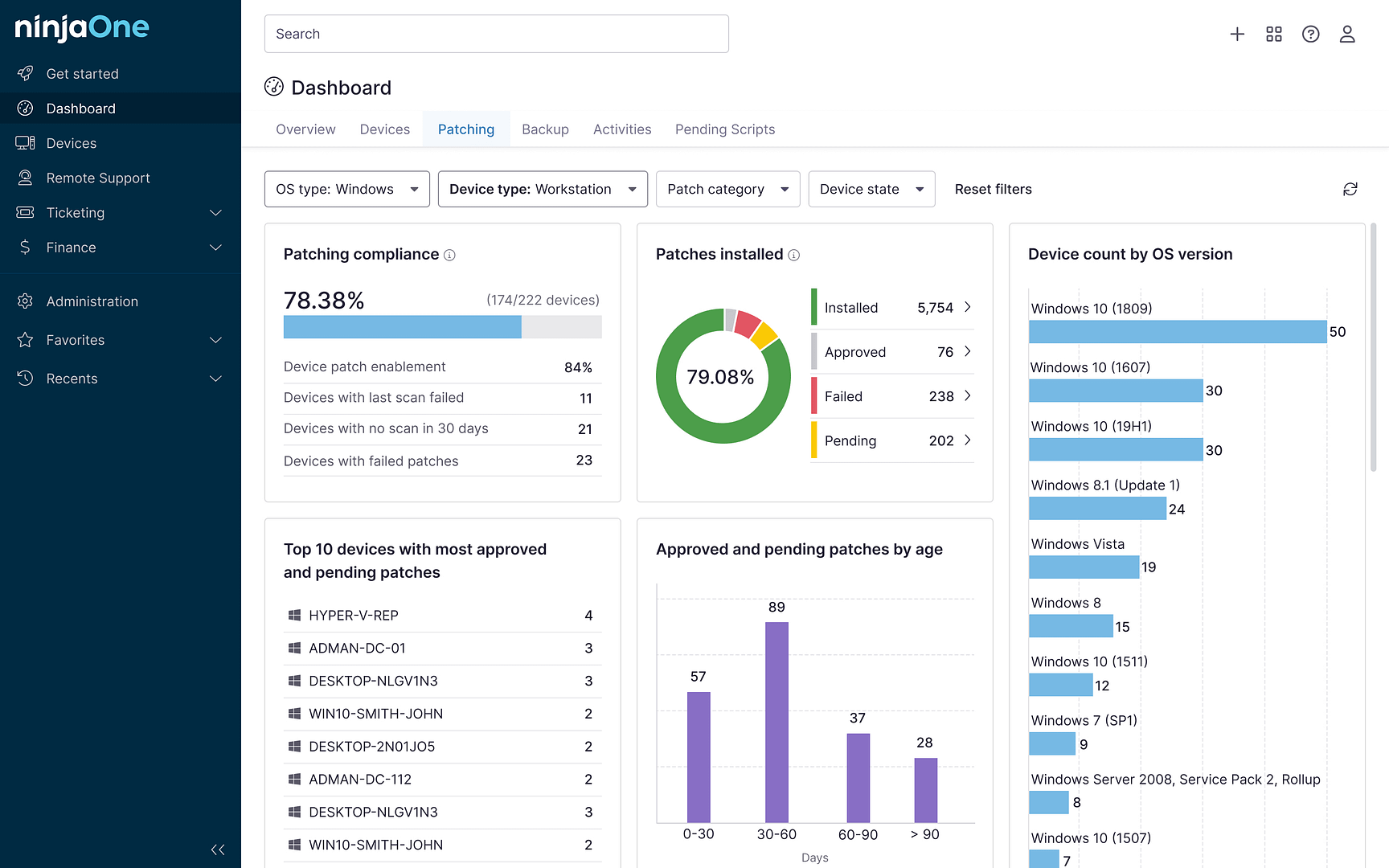
Want a deeper understanding of how patching fits into a strong security strategy? Explore NinjaOne Patch Management FAQs for answers to common questions.
Safeguarding the future of wireless network security
It’s imperative to recognize that securing a wireless network is a dynamic and ongoing process; less of a sprint and more of a marathon. The strategies we’ve explored, from encryption and authentication to comprehensive monitoring and staff training, are foundational pillars in constructing a secure wireless environment.
By remaining committed to these best practices and adapting to new threats with agility, businesses can strike a balance between security and functionality, thereby ensuring the protection of their data and the resilience of their operations in the digital age.