
Key Points
- Effective MSP QBRs must be tailored to each client’s environment, compliance requirements, and operational maturity.
- Assign QBR ownership to technical leaders and structure agendas around value-driven metrics to ensure clear accountability and demonstrate service impact across SLAs, risk, security, and business outcomes.
- Use data-driven insights and dashboards to ground recommendations in measurable outcomes, and establish a continuous feedback loop that tracks commitments, assigns ownership, and ties QBRs into the broader IT governance cycle.
- Leverage NinjaOne Documentation to centralize QBR data, automate reporting, and integrate MDM, RMM, security, and ticketing into a unified platform.
Quarterly business reviews (QBRs) are a vital tool for managed service providers (MSPs) to establish and maintain client relationships and ensure that this partnership encourages continued mutual growth. While it would seem intuitive that sales teams are involved, especially when issues surrounding contract renewal or the expansions to provide more services are discussed, QBRs led by service managers or technical leads can often lead to better outcomes.
This guide provides a framework for performing an MSP QBR led by technical stakeholders, so that your MSP can present clients with confident assessments of your successful service for the preceding period.
Why running QBRs without sales interference can be a benefit for MSPs
QBRs are the periodic reviews you make with your clients to ensure that you are meeting both their requirements and expectations, and to plan for future partnership and growth. Each QBR gives your MSP the opportunity to highlight how you’ve benefited your client and provided true value, while giving them the opportunity to provide valuable feedback that can enhance the service you provide and make sure your plans and priorities are in alignment.
This, of course, is an ideal time to suggest new services that your MSP can provide to close gaps, address predicted capacity constraints, or meet emerging requirements. While it may seem sensible to involve sales teams in this, many MSPs do not have a dedicated sales role. It’s also possible that a sales presence could sour the perception of the review: clients do not want to feel pressured into spending money to meet your MSP’s sales targets, but will be open to expanding the scope of their service agreement with you to address real needs and identified trends.
You can ensure growth through service excellence by demonstrating the following in your QBR:
| Component | Value Delivered |
|---|---|
| Service-led ownership | Removes sales optics and builds trust with clients |
| Value-driven agenda | Focuses QBRs on real needs, rather than working backwards from the need to upsell |
| Metrics-based reporting | Demonstrates tangible MSP benefits |
| Feedback/action loop | Ensures accountability and continuous improvement based on client input |
This allows your QBRs to serve their primary purpose of informing clients and engendering trust, while also promoting growth as a powerful sales tool, by ensuring that value delivery, client outcomes, and operational maturity are highly visible.
Prerequisites for detail-focused QBRs that promote MSP growth
You’ll need the following to perform, record, and archive your QBRs:
- Standardized QBR templates that include fields for metrics, projects, risks, and roadmaps
- Defined roles for QBR ownership (for example, service manager, client success manager, or technical lead)
- Access to client data, including ticket history, SLA performance, compliance posture, and device lifecycle
- A client-facing documentation system such as NinjaOne Docs, IT Glue, or SharePoint
- QBR cadence set by client tier (quarterly for high-value clients, semiannual for smaller ones)
MSP QBR templates don’t need to be identical across clients, and may need to be tailored for each client to ensure it is appropriate for their unique operational environment (for example, some clients may deal with sensitive data covered by a data protection law like HIPAA, which requires additional review).
Once you’ve met these prerequisites, you can enact the following methodologies to run effective QBRs without the involvement of a sales team.
Method 1: Assign QBR ownership outside of sales
You should clearly define which technical lead will take ownership of QBRs. This may be a single team member, or different roles will present different aspects of the QBR. For example, a service manager may present SLAs and ticket trends, technical leads can highlight potential risks in the current infrastructure and security posture, and customer success managers can complete the picture by connecting IT performance with business outcomes.
This should result in a clear accountability framework for QBR leadership by technical team members, ensuring that all relevant topics are covered and that competence is demonstrated for all the services you provide.
Method 2: Build QBR agendas around value delivery
Focus on the tangible value you have delivered to your clients, and the real gaps and emerging needs that they should be pre-emptively addressing by purchasing expanded services from your MSP.
Cover topics such as:
- SLA performance and ticket resolution trends
- Backup and disaster recovery readiness
- Security posture and compliance updates
- Hardware lifecycle and refresh forecasts
- Roadmap alignment with business objectives
Obvious upselling can break trust with clients, who rely on you to give an honest assessment of their situation. You don’t want your clients to turn down vital services that cover cybersecurity or backups because they think it’s another attempt at selling them something they don’t really need.
Method 3: Use metrics to demonstrate service impact
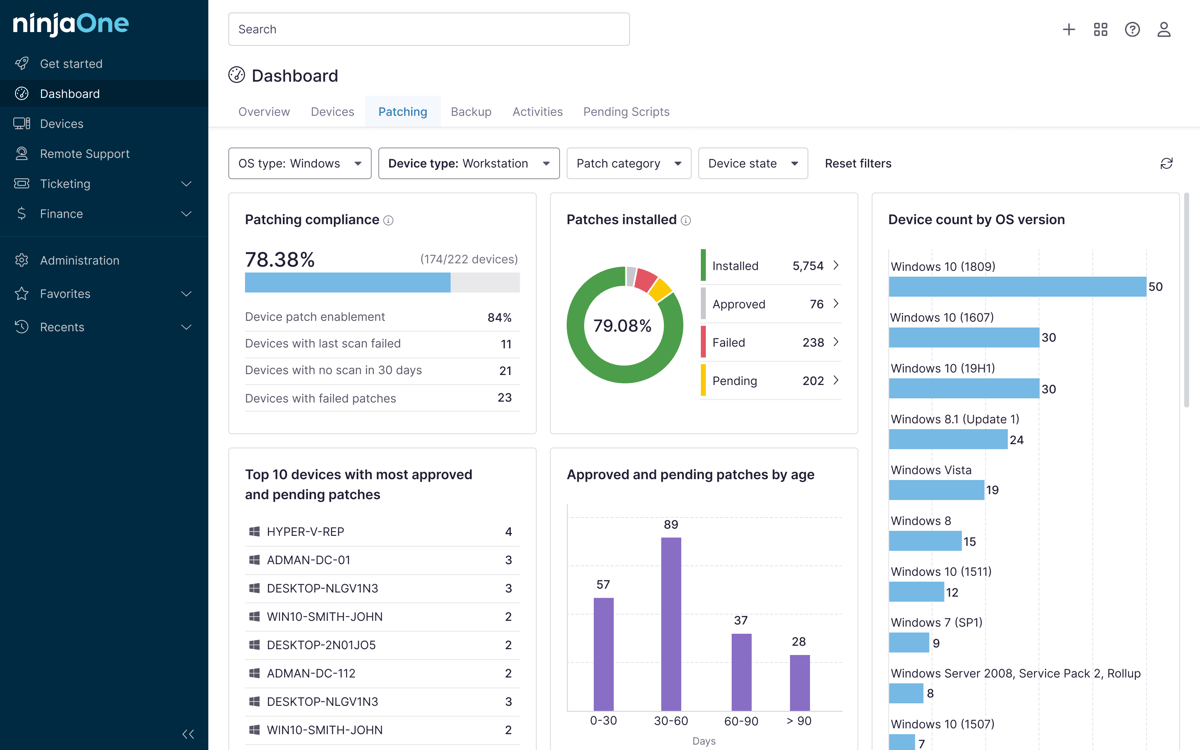
The omission of sales representatives is undermined if you tactlessly suggest your clients purchase additional services without justification. Leverage your MSP toolchain by extracting metrics that demonstrate the points you are trying to make. This includes aspects such as showing ticket reductions after proposed software upgrades were implemented, patch deployment leading to improved compliance, backup RTO/RPO validation results, and endpoint/engineer ratios.
This can be presented as graphs in QBR documents, and can also be presented in live dashboards for ongoing visibility and communication.
Method 4: Create a feedback and action loop
QBRs should be a two-way collaborative process between you and your client. Make sure you seek feedback from them, including pain points and future goals. Be sure to cover points specific to your client’s operating environment so that it is clear to them that you are working to better understand their business and how you can best serve it.
Record commitments to be actioned, and assign owners and due dates to ensure accountability. At each QBR, review the documents from the previous meeting to demonstrate their satisfactory completion. Through this, you can make QBRs an iterative process of improvement to your MSP/client relationship.
Method 5: Integrate QBRs into governance cycles
Consider your MSP QBR process to be part of the IT governance cycle rather than a part of sales. Use your MSP’s technical tools to inform, create, present, and archive your QBR documents to lend them further legitimacy.
This can be done by documenting QBRs and outcomes in your centralized IT documentation, maintaining a full archived history of QBR documentation for future review. You can leverage MSP automation tools to feed data and gain insights for SOP reviews, roadmap planning, and budgeting sessions, as well as use these aggregated findings across your client base to guide your overall MSP service strategy.
QBRs enabled and enhanced by NinjaOne
QBRs don’t just provide an opportunity for providing new services to existing clients – demonstrating the competence, timeliness, and thoroughness of your MSP can lead to increased referrals through word-of-mouth, and give you the opportunity to provide case studies of existing success with prospective clients.
Choosing the right documentation platform can make all the difference. By collecting and formatting technical data, you can use it to demonstrate the effectiveness and responsiveness of your MSP. You can also use it to present the actual changing requirements that justify your client’s increasing their spend with you to receive service that will enable their continued success.
NinjaOne Documentation does all of this and more, as part of the NinjaOne suite of MSP tools. This includes mobile device management (MDM), remote monitoring and management (RMM), endpoint security integration, and a full-featured ticket desk – all with integrated automation features for a single, unified MSP platform.