
Key Points
- Vulnerability scanning automatically detects known weaknesses; penetration testing manually exploits them to prove real-world impact.
- Scanning is fast and broad (hours, run monthly or quarterly); testing is slow and deep (days to weeks, run at least annually).
- Penetration testing requires skilled security professionals thinking like attackers; scanning runs largely unattended once configured.
- Neither replaces the other: scanning catches known issues continuously, while testing validates how those and other weaknesses could actually be chained into an attack.
- Compliance frameworks like PCI DSS require both on a set schedule, not just whichever one an organization prefers.
While you might think penetration testing vs vulnerability scanning are the same, each serves a unique purpose in safeguarding your network. Understanding when to employ each can enhance your security posture. So, what situations call for penetration testing, and when should you rely on vulnerability scans?
Before diving into the mechanics of each method, here is a high-level look at how they compare across key operational areas:
| Feature | Vulnerability Scanning | Penetration Testing |
| Nature | Automated and software-driven | Manual and human-led |
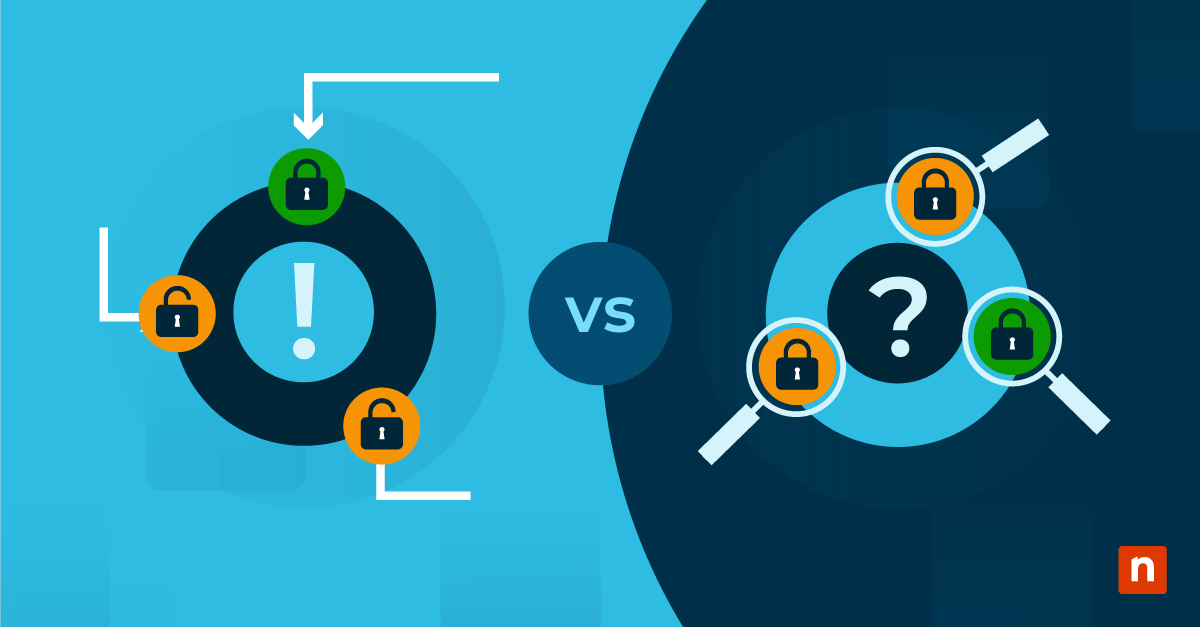
| Approach | Passive identification (finds the lock) | Active exploitation (picks the lock) |
| Scope | Broad (scans the entire network) | Targeted (focused on specific assets) |
| Frequency | Monthly, quarterly, or post-patching | Annually or after major architecture shifts |
| Output | List of known flaws ranked by severity | Narrative of exploit paths and systemic fixes |
What is penetration testing?
Penetration testing, or pen testing, is a simulated cyber attack that actively exploits vulnerabilities in a computer system to reveal how a real attacker could compromise it. A pen test actively exploits weaknesses to determine the impact, sort of like a real-world exercise to test your defenses. Ultimately, a penetration test helps you understand how an attacker could exploit your system and provide a more realistic assessment of your security posture.
What is vulnerability scanning?
Vulnerability scanning is an automated process that detects and reports known security weaknesses in a system without exploiting them. You can think of it as a health check-up for your network. This software scans your systems, including servers and networks, to identify known security issues such as outdated software, missing patches or misconfigurations that could be exploited by attackers.
Vulnerability scanning is a proactive measure to protect your digital assets and provides a report that categorizes vulnerabilities, rates their severity and recommends remediations. Regular scans help you understand your security posture, and prioritize fixes before an attacker can exploit these vulnerabilities.
Vulnerability scans can be run internally, checking systems from inside your network, or externally, checking internet-facing systems the way an outside attacker would see them. Most organizations run both, since each reveals different types of exposure.
Boost your defenses by knowing your testing methods. Watch Penetration Testing vs Vulnerability Scanning to understand the difference.
Detect vulnerabilities within your networks with NinjaOne
See how NinjaOne Vulnerability Management can detect and remediate vulnerabilities in a free demo
Penetration testing vs vulnerability scanning
Before we go into penetration testing and vulnerability scans in depth, here is a quick summary of their main differences:
| Attribute | Penetration testing | Vulnerability scanning |
| Purpose | Actively exploits weaknesses to show real-world impact | Automatically detects and reports known weaknesses |
| Method | Manual, expert-driven | Automated, tool-driven |
| Depth | Deep, targeted, scenario-based | Broad, surface-level, systematic |
| Human involvement | High; requires skilled security professionals | Low; requires minimal personnel involvement |
| Typical frequency | At least annually, more often for high-risk sectors | Monthly or quarterly |
| Time required | Days to weeks | Hours to a day, largely automated |
| Output | Detailed report with exploit scenarios and remediation strategies | Report listing vulnerabilities, severity ratings, and recommended fixes |
Each method has its own set of methodologies and processes that dictate how they’re implemented and the depth of the assessment they provide. When comparing a pen test vs vulnerability assessment, consider the differences in the need for specialized human expertise, the time and resources required and how often each of these two critical security practices should be done.
Methodology and process
There are some key differentiators between the methodology and process of penetration testing vs vulnerability scanning. Here’s a breakdown of the differences:
- Initiation: Penetration testing often starts with a pre-engagement phase where you define goals and scope. Vulnerability scanning is more straightforward, initiated with automated tools scanning for known vulnerabilities.
- Discovery: In penetration testing, you’ll actively explore and map out the target environment. Vulnerability scanning automatically identifies and catalogs system weaknesses.
- Exploitation: Penetration testing involves actively exploiting found vulnerabilities, often chaining minor flaws together to assess potential damage. Vulnerability scanning does not involve active exploitation.
- Reporting: Both methods conclude with actionable reports. Vulnerability scan reports rely on automated, vendor-provided severity scores and generic patching steps. Penetration testing reports are custom-authored narratives detailing specific exploit scenarios, the actual business impact, and strategic architectural remediations.
Depth and scope of assessment
Penetration testing dives deep into your system to mimic real-world attacks. It’s comprehensive, targeting specific systems and using manual techniques to not only find but also exploit weaknesses. Vulnerability scanning is broader but less deep. It uses automated tools to scan your entire network or specific systems for known vulnerabilities. It’s quicker and covers more ground but doesn’t delve into exploiting the weaknesses found.
When comparing a penetration test vs vulnerability test, a vulnerability test gives a broad view of potential security issues but doesn’t provide the in-depth exploration of how these issues can be exploited that a pen test does.
Human involvement and expertise
Human involvement and expertise both play roles in distinguishing penetration testing from vulnerability scanning. While both are an important part of a cybersecurity playbook, they rely differently on skills. Here are the skills required for each method:
Penetration testing: Requires highly skilled cybersecurity professionals who simulate real-world attacks to exploit vulnerabilities actively. Testers use their expertise to think like hackers, providing analysis and insight that goes beyond what automated tools can achieve. Pen testers often need to devise unique strategies and solutions, using creative problem-solving to tailor their approach to each specific scenario.
Vulnerability scanning: Uses automated tools to identify potential vulnerabilities in a system but lacks the depth that human-driven testing provides.
Time and resource requirements
Penetration testing generally demands more time and resources than vulnerability scanning, as it involves comprehensive, manual testing by skilled professionals. A typical pen test can take days or even weeks depending on the complexity and scope of your network. Each test is uniquely tailored to your environment, requiring significant planning and analysis.
On the other hand, vulnerability scanning is more automated and can be done more frequently with less personnel involvement. These scans quickly identify known vulnerabilities and provide a baseline of your security posture. However, vulnerability tests don’t explore the nuances of how an attacker could exploit these weaknesses, making them less resource-intensive but also less insightful compared to penetration testing.
Frequency of execution
You should consider the frequency of both penetration testing and vulnerability scanning based on your organization’s specific security needs and risk profile. Here’s a quick guide:
- Vulnerability scanning: Typically, run these scans quarterly or even monthly. They’re less intrusive and can be automated, helping you keep up with new vulnerabilities.
- Penetration testing: Conduct these tests at least annually. For high-risk sectors, consider upping the frequency to biannually.
- After significant changes: Whenever you implement major system updates or add new network infrastructure, schedule both tests.
- Compliance requirements: Some industries have specific guidelines on testing frequencies. Ensure you’re not only compliant but also secure.
Pen test vs vulnerability assessment: When to use each
You should opt for a vulnerability assessment when you need a broad overview of your system’s weaknesses. It’s less intrusive and typically automated, making it ideal for regular, wide-scale checks. A pen test is more appropriate when you need a deep dive into how an attacker could exploit specific vulnerabilities.
When deciding on a pen test vs vulnerability assessment, a penetration test is a targeted, manual process and is a particularly useful choice after significant changes to your infrastructure or when complying with security standards. Choose a vulnerability assessment for frequent, general maintenance and a pen test for in-depth, scenario-based analysis.
Protect your infrastructure proactively. Watch What is penetration testing? for expert strategies.
Catch hidden ransomware before they attack with NinjaOne
Learn how NinjaOne Endpoint Management can detect ransomware in a free trial
Integrating penetration testing and vulnerability scanning in security programs
Optimize your security measures by integrating penetration testing and vulnerability scanning into your cybersecurity program. Here’s how you can effectively combine these tools:
- Schedule regular scans: Use vulnerability scanning monthly to identify and address security flaws before they can be exploited.
- Conduct penetration testing annually: Perform penetration tests yearly or after significant changes to your infrastructure to simulate real-world attacks.
- Correlate findings: Cross-reference the results from both methods to prioritize vulnerabilities that need immediate attention.
- Refine security policies: Adapt your security protocols based on the insights gained from the tests and scans to strengthen your defenses against future attacks.
While penetration testing vs vulnerability scanning serve distinct roles in a cybersecurity framework, integrating both is crucial for robust security. Together, they provide a thorough understanding of your system’s weaknesses and help ensure comprehensive security.
Whether you’re running vulnerability scans, penetration tests, or both, strong device security is the foundation that makes those results actionable. NinjaOne Protect helps you patch, harden, and secure every device from one central console, so you can act on what your testing finds. Discover more about NinjaOne Protect, explore a live demo, or begin your free trial of the NinjaOne platform.