Key Points
How to Build a Quick Wins Project List to Strengthen Client Relationships
- Define clear criteria focusing on low-effort, high-impact projects that solve specific client needs quickly and visibly.
- Source ideas systematically from existing operational data like tickets and monitoring reports to identify recurring issues.
- Curate a prioritized list ranking projects by client visibility, effort required, and strategic alignment.
- Present during routine reviews by embedding 2-3 quick wins in QBRs as proactive solutions.
- Track and report outcomes to demonstrate proven value and build momentum for larger projects.
While major IT transformations demand months of planning, it’s the steady delivery of small, impactful, quick-win projects that consistently strengthen client relationships. Brief initiatives like resolving a recurring printer failure or securing unused accounts can demonstrate proactive value between large-scale rollouts.
This guide will show you how to systematically build a pipeline of these trusted quick-win initiatives, from identification to presentation, turning everyday tasks into proven relationship-building tools.
How to create your quick IT wins project list to build client trust
A strategic list of quick-win projects is essential for demonstrating immediate value and building client trust.
📌 Use cases: Introduce IT quick wins at key relationship moments. The best opportunities are during onboarding to immediately set a positive tone, in Quarterly Business Reviews (QBRs) to showcase proactive value, or after a minor incident to rebuild confidence and demonstrate responsiveness to their needs.
📌 Prerequisites: Success requires preparation. First, gather baseline data from the client’s environment, including asset lists, ticket history, and backup reports, to ensure your suggestions are data-driven.
Next, have a service catalog with pre-packaged, small-scale offerings that can be deployed rapidly, such as Windows 11 optimization or security hardening tasks. Finally, secure internal buy-in so account managers can present and approve these projects during routine client meetings without delay.
Once you’re ready, follow the steps below.
Step 1: Define what qualifies as a quick win
To build an effective list, establish clear criteria that separate true quick-win projects from other IT tasks.
A project qualifies as a quick win if it meets these four key criteria:
- Low Effort, High Impact: Requires minimal internal resources but delivers visible results within 2-4 weeks
- Minimal Disruption: Can be implemented without interrupting the client’s daily workflow
- Clear Affordability: Is either low-cost or included within an existing service agreement
- Directly Addresses a Need: Solves a specific pain point or reduces a recognized security risk
This checklist ensures every initiative is a high-value “slam dunk” that builds momentum and is crucial for building client trust. Apply this filter during client health checks or early in a relationship to identify easy victories that demonstrate value and pave the way for larger IT quick wins.
By applying this definition, you create a pipeline of reliable projects that prove your value and open the door to more strategic discussions.
Step 2: Source ideas from operational data
Your existing tools and reports are a goldmine for discovering impactful, quick-win projects.
Step-by-step procedure:
- Scan Tickets: Identify recurring, low-level issues like a specific printer error. A minor fix here eliminates a daily frustration.
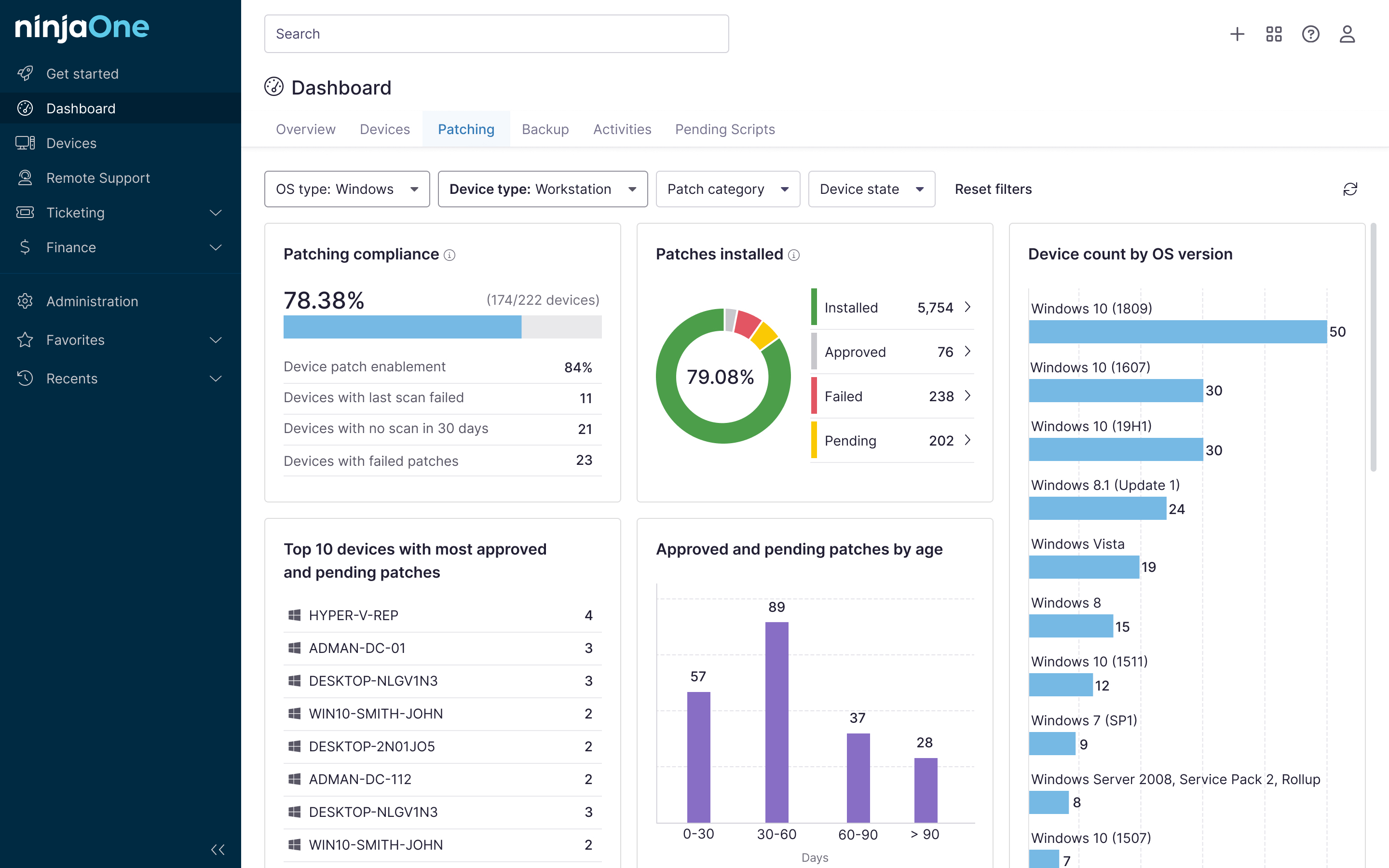
- Review RMM Reports: Look for clusters of devices that are missing patches or have expired warranties. Remediating these specific security risks. Refer to the NinjaOne integration section below for more details.
- Audit Compliance: Find overdue, simple tasks like cleaning up dormant user accounts. This addresses audit requirements with minimal effort.
- Listen to Users: Note repeated feedback from support calls; a common Windows configuration issue can be turned into a quick training guide.
This process can transform reactive data into proactive opportunities, ensuring every proposed IT quick win solves a real client pain point and is crucial for building client trust. Conduct this analysis monthly or before client reviews to keep your backlog fresh.
Step 3: Prioritize and curate the list
Strategic curation ensures your quick-win projects deliver maximum value for minimal effort.
Rank potential projects using three key filters:
- Client Impact and Visibility: Prioritize solutions for frequent, visible pain points, like eliminating a daily Windows application crash.
- Effort Required: Favor “slam dunk” projects with low time and resource costs to guarantee swift, profitable execution.
- Strategic Alignment: Select initiatives that support broader goals, such as a compliance task that also hardens security.
This process identifies high-impact, low-risk IT quick wins that reliably build client trust. Conduct this curation before client meetings to ensure an actionable list.
Deliverable: A curated, prioritized list
Your final list should be a short, ranked set of top candidates. For example:
- Enable MFA for the leadership team (High security impact, low effort).
- Cleanup of dormant user accounts (Immediate risk reduction, very low effort).
- Resolve recurring printer issue (Eliminates daily frustration).
This curated list offers a clear roadmap for immediate action and fostering relationships.
Step 4: Present quick wins in client planning sessions
Integrating quick win projects into regular client meetings transforms routine reviews into value-driven conversations.
Follow this concise presentation method:
- Embed in Agendas: Include 2-3 curated quick win proposals in every QBR or monthly check-in.
- Frame as Solutions: Present them as proactive recommendations, not sales pitches. For example, “Here’s a simple way to resolve those frequent Wi-Fi complaints.”
- Show Visual Proof: Use brief visuals like a before-and-after metric to make the benefits immediate and tangible.
This approach demonstrates consistent value delivery during existing touchpoints, which is fundamental for building client trust. The deliverable is a dedicated “Quick Wins” section in your QBR deck.
By presenting IT quick wins this way, you create momentum that naturally leads to discussions about larger strategic projects.
Step 5: Track results and feedback into the strategy
Documenting outcomes transforms completed tasks into proven value that fuels future strategy.
Follow this process after each quick win:
- Measure the Impact: Quantify results like reduced ticket volume or improved Windows security scores.
- Showcase the Evidence: Use simple before-and-after visuals to make the success undeniable for clients.
- Leverage the Success: Use documented wins to justify and introduce larger strategic projects.
This systematic tracking provides concrete proof of your value, answering why it’s essential to show your clients quick wins and fundamentally building client trust.
Deliverable: A quarterly quick wins impact report
This concise report, included in governance materials, provides a cumulative record of value that directly paves the way for broader strategic engagements.
Automated quick win workflow: From alert to value report
Transform automated alerts into documented client value with this three-step procedure.
Step 1: Detection and triage
Your RMM tool automatically identifies a specific, fixable issue, such as 20 devices missing a critical patch. Refer to the NinjaOne Integration section for details on how RMM can accomplish this.
Step 2: Automated execution
A pre-approved script deploys the necessary patches overnight, resolving the issue with zero client disruption.
Step 3: Result documentation and reporting
The system generates a one-page “Quick Win Report” showing the compliance improvement, which can then be shared in the next client meeting.
This automated workflow provides tangible proof of your proactive management, consistently building client trust by turning routine maintenance into documented value.
Quick-Start Guide
NinjaOne’s existing tools and workflows to can manually create a “Quick Wins Project List”, leveraging its ticketing, automation, and client communication capabilities.
How You Can Achieve This with NinjaOne:
1. Use Ticketing to Capture Client Requests
- Log client feedback, feature requests, and pain points in NinjaOne tickets.
- Tag tickets with custom tags like
Quick-Win,Client-Request, orHigh-Impact.
2. Leverage Automation for Prioritization
- Create automation rules to auto-assign tickets to categories like “Quick Wins” based on criteria (e.g., low effort, high client impact).
- Use triggers such as client satisfaction scores or frequent support requests to flag candidates.
3. Manual Curation by Support Teams
- Support technicians can review open tickets and identify low-hanging fruit (e.g., minor bugs, UI tweaks, quick integrations).
- Add these to a shared document or task board (e.g., in Slack, Trello, or Zendesk) for visibility.
4. Client Communication & Feedback
- Use NinjaOne’s communication tools (email, chat) to confirm client priorities and gather feedback on potential quick wins.
- Share progress updates directly from tickets or dashboards.
5. Reporting & Tracking
- Generate reports on ticket resolution times, client satisfaction, and automation performance to measure the impact of quick wins.
Streamline your quick wins with NinjaOne
NinjaOne’s integrated platform helps MSPs systemize the entire quick-win project lifecycle.
- Discover: Use built-in reports to instantly spot patch gaps, backup failures, and Windows performance issues, making this an ideal candidate for IT quick wins.
- Automate: Execute fixes using pre-built scripts and automated tasks that resolve common issues without manual effort.
- Standardize: Store proven procedures in documentation templates and checklists for consistent, repeatable execution.
- Demonstrate: Create scheduled reports and dashboard visualizations that showcase results, clearly building client trust with tangible metrics.
- Evolve: Track client feedback through ticketing trends to continuously refine your quick win offerings based on actual needs.
This systematic approach transforms random fixes into a strategic value engine.
Spot patch gaps and backup failures, automate remediation with pre-built scripts, standardize checklists, and prove impact with scheduled reports and dashboards.
→ Build your Quick Wins plan in NinjaOne
Strategic success with quick-win projects
A disciplined, quick-win project strategy does more than resolve immediate IT issues because it builds the trusted foundation essential for strategic partnerships.
By systematically identifying, presenting, and documenting these small victories, you consistently demonstrate value and proactively strengthen client relationships.
This reliable approach transforms you from a reactive vendor into a strategic advisor, seamlessly creating momentum for the larger initiatives that drive business growth.
Related topics: