
Key Points
- AI-powered vulnerability discovery is increasing CVE volume and compressing the time defenders have to identify, prioritize, and remediate exploitable vulnerabilities.
- Traditional scheduled scanning and patch cycles struggle when vulnerability discovery and exploitation move continuously rather than according to predictable maintenance windows.
- Faster remediation requires continuous vulnerability assessment, exploitability context, risk-based prioritization, and automation rather than treating every CVE equally.
- Patch automation should use deployment guardrails, allowing lower-risk updates to flow automatically while preserving human review for complex or critical systems.
- IT teams should evaluate whether current patching processes can absorb substantially higher vulnerability volumes without increasing remediation backlogs or operational disruption.
- NinjaOne combines real-time vulnerability assessment, exploitability intelligence, and autonomous patch management to help teams prioritize and remediate vulnerabilities at scale.
This summer delivered one record-breaking Patch Tuesday after another. First was July, when Microsoft issued its then-largest single month release to date (covering 600+ CVEs, triple June’s previous record). And while August saw a slight dip (addressing just over 400 flaws), September’s Patch Tuesday answered with a new record: roughly 972 vulnerabilities fixed. 112 of them met a high critical-severity threshold.
Recently introduced frontier AI models like Mythos and GPT 5.5-Cyber (Daybreak) have fundamentally altered the way we approach vulnerability management, even in the few months since their release and despite remaining in largely restricted access.
While AI continues to compress the time between attackers discovering a vulnerability and weaponizing it, AI-powered vulnerability discovery systems from organizations like Microsoft are also becoming more advanced – accelerating activity on both sides of the equation. As a result, the patch swell we’re seeing continues to pick up pace. But remediation speed has, so far, not matched that of discovery. As we move forward, it’s important that organizations understand how to both accommodate a higher vulnerability volume and remediate more effectively, before adversaries can take advantage of accelerated cycles of their own.
Find the vulnerabilities hiding in your environment.
Why AI is changing vulnerability discovery and exploitation
Discovery does little, in this new Mythos era, if not paired with intelligent, accelerated remediation. This is becoming increasingly clear. In 2026, for the first time in 19 years, vulnerability exploitation was the number one breach vector for bad actors. Additionally, Mandiant M-Trends 2026 report found that the mean time to exploit is now -7 days (meaning that the average vulnerability is being weaponized a week before a patch even exists).
What we are currently witnessing is more than just the end of patch cycles as we know them. We’re seeing the necessary end of scheduled scans driving patch updates. It’s imperative that defenders modify remediation to account for the fact that much of today’s “process” was built to accommodate vulnerability discovery at much lower volume, and for a much different era.
How vulnerability remediation must adapt
Today, patch automation offers a compelling path to accelerate vulnerability discovery. But it must be paired with guardrails to enable faster, risk-aware patching at scale, to drive resilience without compromising stability.
Organizations that have delayed automation investments are finding themselves behind the curve. At the same time, automating everything is not the most effective answer. Gartner recommends adopting a tiered deployment framework that prioritizes keeping humans on the loop for patches pertaining to complex or high-criticality systems, while accounting for low-complexity, low-criticality updates to flow through autonomously.
Additionally, organizations should seek to shorten current mean-time-to-patch for critical CVEs and ensure that their current processes are able to absorb at least a 3x increase in monthly CVE volume as we continue through the second half of this year. For example, Google Chrome is already releasing new security updates bi-weekly.
Modernize your patching strategy.
The difference between sink or swim
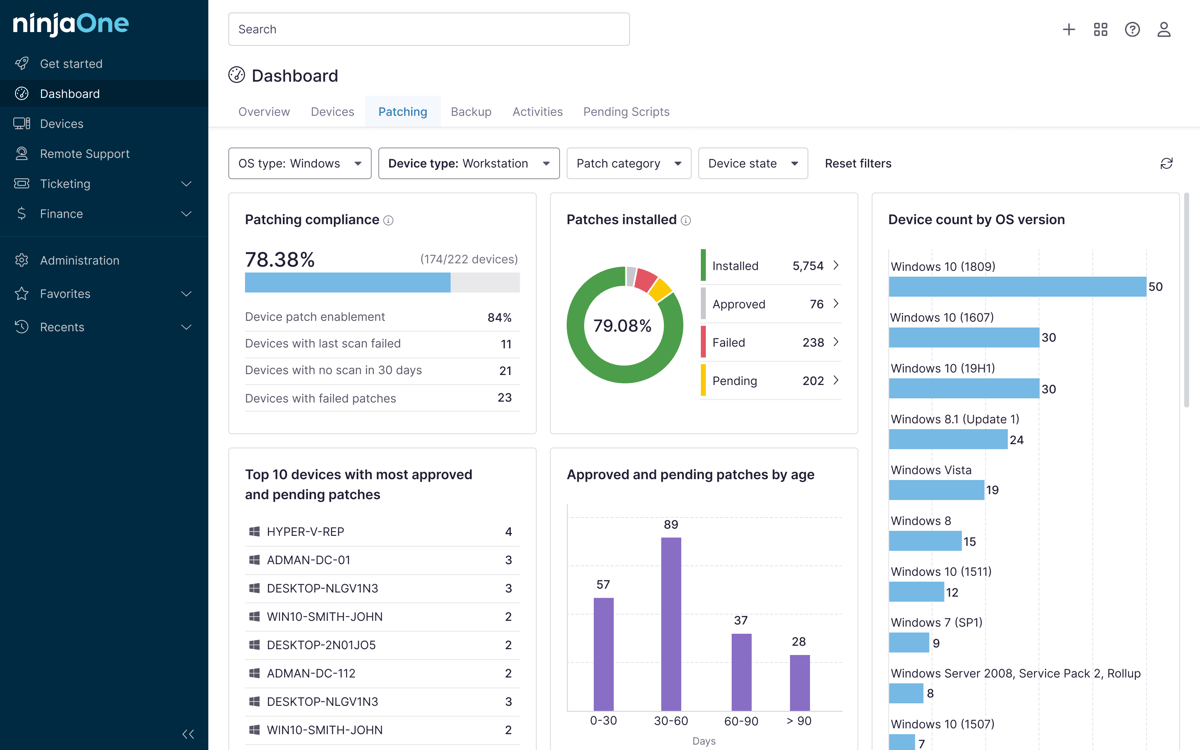
NinjaOne’s Autonomous Patch Management is uniquely architected to help technicians quickly identify and remediate known and pressing vulnerabilities, by accounting for asset context and exploitability intelligence. Paired with NinjaOne Vulnerability Management, for real time assessment with application performance monitoring (APM), technicians can move forward with greater confidence and intelligence around the patches that require their urgent attention and matter most for business.
Additionally, our Patch Intelligence AI ensures that stable OS patches can flow through automatically while known bad patches are flagged for human review; curbing the potential for larger operational disruption due to an unstable patch being broadly deployed.
The main takeaway here is this: we’re already in the middle of a large surge in vulnerability discovery. While AI is enabling attackers to move faster than patch cycles, it’s offering defenders the same advantage in discovery. Ultimately, the organizations that can turn faster discovery into faster remediation will be the ones best equipped to adapt as the swell continues.