NinjaOne MDM mobile OS update management
NinjaOne MDM manages mobile OS updates across company-owned devices, helping IT teams schedule updates, enforce policies, and maintain device security and compliance.
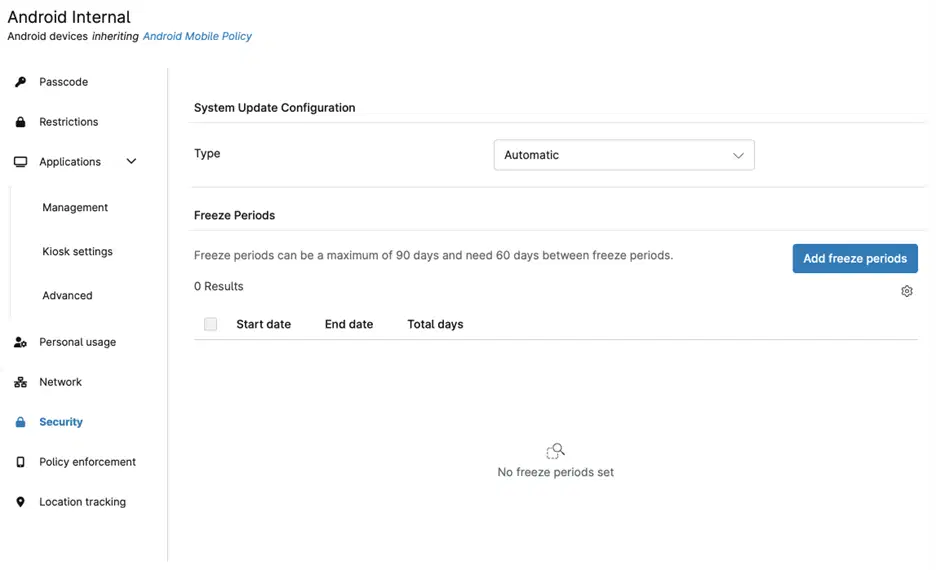
NinjaOne MDM manages mobile OS updates across company-owned devices, helping IT teams schedule updates, enforce policies, and maintain device security and compliance.






Problem | How NinjaOne resolves it |
Organizations need to keep company-owned Android devices updated without relying on users to manually install available OS updates. | NinjaOne MDM lets IT teams configure Android system updates to install automatically when available, reducing the need for manual intervention and helping keep managed devices current. |
Mobile devices may need updates to occur outside of active business use to avoid disrupting users or dedicated-device workflows. | NinjaOne supports scheduled update windows for Android devices, allowing administrators to define when updates can be checked for and installed. |
IT teams may need to delay OS updates while they validate compatibility or coordinate deployment across their mobile fleet. | NinjaOne provides update controls that can postpone Android OS updates and, for Apple devices, delay when newly released updates become available for self-installation. |
Organizations need to control which Apple OS updates are approved and when devices must install them. | NinjaOne allows administrators to approve specific Apple OS versions and set enforcement deadlines, helping ensure managed iOS and iPadOS devices reach the required version by a defined time. |
Devices spend less time running outdated operating systems by automating OS update deployment and applying update policies across managed mobile devices, helping IT teams keep devices current without relying on users to initiate updates manually.
Security updates can be deployed with greater consistency by centrally managing OS update behavior across the mobile fleet, reducing the risk of devices remaining unpatched because users delay or overlook available updates.
Updates can be timed around business operations by using scheduled update windows and configurable update behavior, allowing organizations to apply updates when devices are less likely to be in active use and minimizing disruption to employees and frontline workflows.
IT teams gain greater control over update timing by using platform-specific controls such as Android update windows, postponement periods, and freeze periods, as well as approved OS updates and enforcement deadlines for Apple devices.
OS update compliance is easier to track through centralized reporting and visibility into update status, giving IT teams a clearer view of OS version, update status, and compliance information across managed devices.
Mobile update administration scales more efficiently because technicians can apply update policies centrally instead of manually configuring individual devices, making it easier to maintain consistent update practices across growing device fleets.

NinjaOne MDM automatically pushes Android OS updates to enrolled devices. Windowed mode allows technicians to configure a daily time period for devices to check for and apply updates. If no window is specified, devices follow their default update process.

NinjaOne Apple MDM manages OS updates for enrolled iOS, iPadOS, and macOS devices through Apple’s Declarative Device Management. Technicians can approve individual updates and set an enforcement date and time to control when devices must install them.

IT teams can coordinate mobile OS updates around business hours and device usage patterns. Configurable scheduling controls help reduce interruptions by applying updates when managed devices are less likely to be in active use.

A centralized dashboard provides visibility into each enrolled device’s OS version, security status, and policy compliance. IT teams can identify devices that have completed an update and those still pending, while scheduled reports can automatically deliver device health and compliance data.
Organizations with fleets of company-owned Android smartphones and tablets can use NinjaOne MDM to manage OS updates from a central console. IT teams can establish update policies and schedules, helping ensure devices receive available OS and security updates without requiring technicians to update each device manually. This is particularly useful for organizations managing mobile devices across multiple departments or locations.
Organizations can use NinjaOne to schedule mobile OS updates at appropriate times to reduce disruption to employees and business operations. IT teams can coordinate update deployments with periods when devices are less likely to be in active use, helping avoid unexpected interruptions for workers who depend on managed smartphones and tablets throughout the day.
Businesses with Android devices deployed across multiple offices, branches, stores, or remote locations can manage OS update policies centrally through NinjaOne MDM. Administrators can apply consistent update configurations to groups of managed devices and monitor update progress from a single platform, reducing the need for location-by-location administration.
IT teams configure OS update behavior for managed devices using the controls available for Android and Apple platforms, aligning update handling with organizational maintenance requirements.
Administrators can use Android update modes, windows, postponement, and freeze periods to manage how and when Android devices update, while Apple devices support update approval and enforcement dates to control when approved updates are deployed.
NinjaOne MDM applies the configured OS update policies to supported Android and Apple devices according to the update controls available for each platform.
IT teams can review OS version, update status, and compliance information for managed devices to identify devices that have completed an update, remain pending, or may require follow-up attention.
Mobile OS update management that keeps devices compliant
NinjaOne MDM automates the deployment of policies and OS updates to mobile devices, giving IT teams centralized control and consistent compliance across their fleet. FCC Behavioral Health uses NinjaOne MDM to manage and secure its mobile devices, helping the healthcare organization maintain HIPAA compliance across a distributed team.
"Data security and HIPAA compliance are essential in healthcare. With NinjaOne, policies and patches are not delayed, keeping our network secure and helping us stay compliant."
— Tyler Ellison, IT Officer, FCC Behavioral Health
Source: NinjaOne
Give IT teams a centralized way to manage Android and Apple OS updates across company-owned mobile devices. With NinjaOne MDM, administrators can monitor OS versions, configure update policies, and keep supported devices aligned with organizational update requirements from one platform.
NinjaOne mobile OS update management is the NinjaOne MDM capability that lets IT teams schedule, approve, and enforce Android and Apple OS updates on company-owned devices from one console, rather than relying on end users to install updates manually.
Yes. Administrators can set a daily update window for Android devices and an enforcement date and time for approved Apple OS versions, so updates apply on a schedule IT defines instead of whenever a device checks in.
Mobile OS updates are necessary because they patch security vulnerabilities, fix bugs, improve device stability, maintain app compatibility, and introduce new features. For business devices, keeping the OS up to date can also help organizations meet security and compliance requirements and reduce the risks associated with outdated software. NinjaOne MDM helps IT teams manage these updates across company-owned Android and Apple devices from one console.
NinjaOne MDM helps IT teams centrally manage OS update policies and control when updates are applied across managed Android and Apple devices. Administrators can use Android update windows, postponement, and freeze periods, as well as Apple update approval and enforcement controls, to manage updates according to platform-specific requirements. This visibility and control helps organizations keep devices on supported OS versions while reducing manual follow-up.