KB5087053: Overview with user sentiment and feedback
Last Updated June 8, 2026
Probability of successful installation and continued operation of the machine
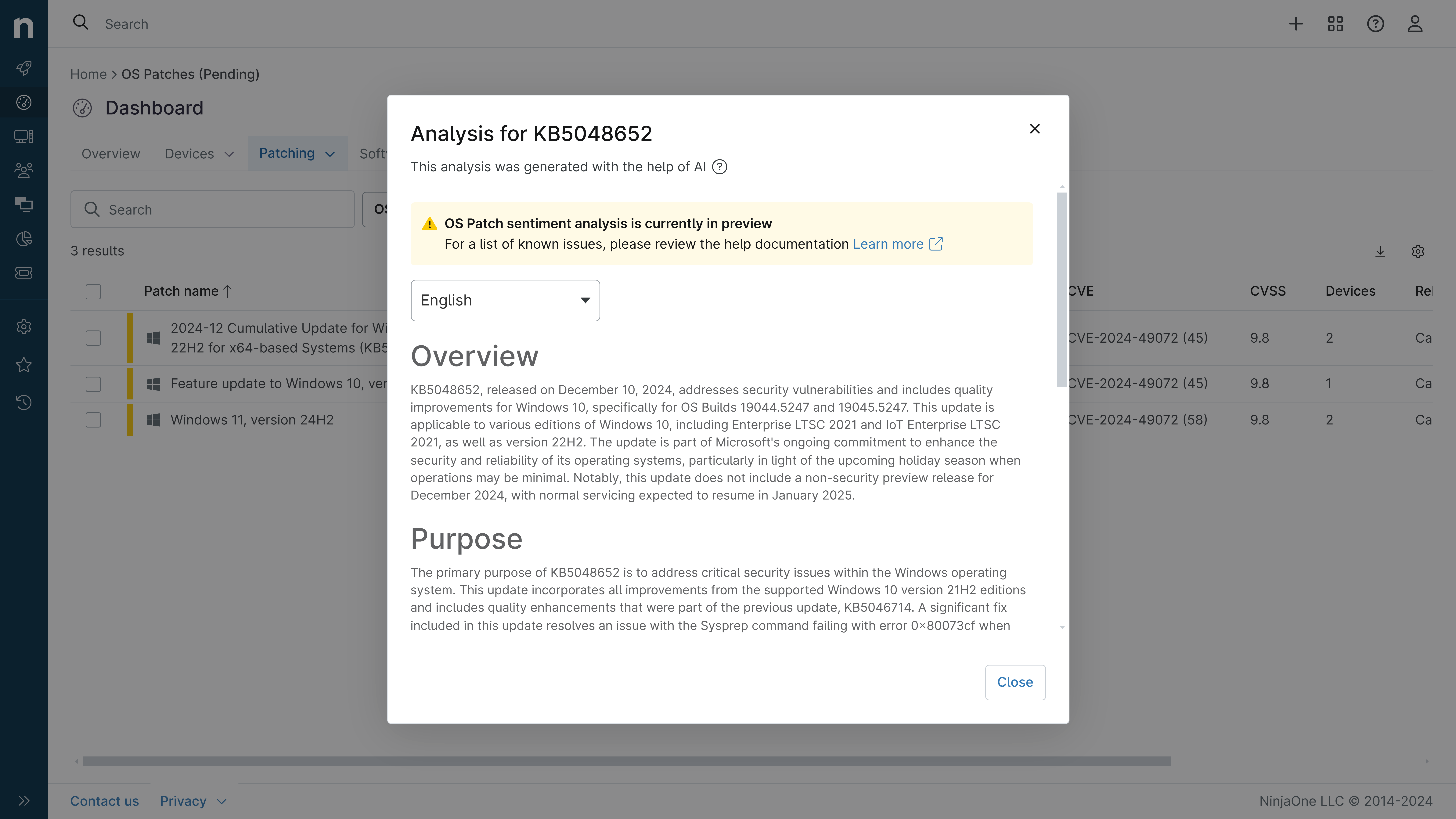
Overview
KB5087053 is a cumulative security update released on May 12, 2026, targeting .NET Framework versions 3.5 and 4.8.1 across Windows 10 Version 21H2 and Windows 10 Version 22H2. This patch is distributed through standard Windows Update channels and is available in multiple architecture variants to accommodate both 32-bit and 64-bit systems.
The update addresses critical security vulnerabilities within the .NET Framework runtime environment. Microsoft has classified this as a security update and recommends applying it as part of regular maintenance routines. The patch is available through multiple distribution mechanisms including Windows Update, Microsoft Update, the Microsoft Update Catalog, and Windows Server Update Services (WSUS), ensuring broad accessibility across enterprise and consumer deployments.
The update requires .NET Framework 3.5 or 4.8.1 to be present on the system prior to installation. A system restart is necessary following installation if any affected files are actively in use, and Microsoft recommends closing all .NET Framework-based applications before applying the patch to minimize potential disruption.
General Purpose
This cumulative update resolves two elevation of privilege vulnerabilities within the .NET Framework that could potentially allow attackers to gain elevated system privileges. The first vulnerability, identified as CVE-2026-32177, and the second, CVE-2026-35433, both represent elevation of privilege risks that warrant timely remediation. By patching these vulnerabilities, the update strengthens the security posture of systems running dependent applications and services that rely on .NET Framework functionality. The patch consolidates these security fixes into a single cumulative release, streamlining deployment across affected Windows 10 installations. While the update does not introduce new quality or reliability improvements beyond the security fixes, it maintains system stability by addressing potential exploitation vectors that could compromise system integrity.
General Sentiment
The sentiment surrounding this update is notably positive, primarily because Microsoft has reported no known issues associated with the patch. The straightforward nature of a security-focused cumulative update with well-defined vulnerabilities addresses legitimate security concerns without introducing apparent complications. The availability through multiple distribution channels demonstrates Microsoft's commitment to accessibility and deployment flexibility. However, potential concerns exist regarding the requirement to restart systems and close running .NET Framework applications, which could impact business continuity in environments with continuous uptime requirements. The lack of quality and reliability improvements beyond security fixes means this update should be viewed primarily as a necessary security measure rather than a comprehensive system enhancement. Organizations running legacy applications dependent on .NET Framework 3.5 may view this favorably as it extends security coverage to older framework versions, though some may question the ongoing support burden of maintaining multiple framework versions.
Known Issues
- Microsoft reports no known issues with this update at the time of release
- No documented compatibility problems with Windows 10 Version 21H2 or Version 22H2
- No reported application incompatibilities or runtime errors following installation
Disclaimer: We take measures to ensure that AI-generated content is of the highest possible quality, but we cannot guarantee its accuracy and recommend that users do their own independent research. Generated on 2026-06-08 07:08 AM