



In Germany, an ISO 27001 requirement may refer to conventional ISO/IEC 27001 certification or specifically to the BSI scheme based on IT-Grundschutz. Both assess an information security management system (ISMS), but the implementation method and certification process differ. This guide explains the BSI route and what internal IT teams and managed service providers (MSPs) should prepare. Start by confirming the required scheme and the scope it must cover.
ISO 27001 certification based on IT-Grundschutz is the BSI certification scheme for an ISMS that meets ISO/IEC 27001 requirements using IT-Grundschutz methodology. An independent audit led by a BSI-certified ISO 27001 IT-Grundschutz audit team leader supports the BSI’s certification decision. The BSI issues the certificate for the defined scope.
What ISO 27001 based on IT-Grundschutz means
A few terms first, because the vocabulary is where most confusion starts.
- ISO/IEC 27001:2022 is the international standard specifying ISMS requirements. It covers how an organization establishes, operates, reviews, and improves information security. Annex A provides reference controls used in risk treatment.
- BSI (Bundesamt für Sicherheit in der Informationstechnik) is Germany’s Federal Office for Information Security.
- IT-Grundschutz is the BSI’s methodology and catalogue of security requirements. It is more prescriptive than ISO 27001 about how to analyze your environment and which safeguards to apply.
- Audit subject (Untersuchungsgegenstand) is what the audit examines within the defined scope (Geltungsbereich). The information domain (Informationsverbund) comprises the organizational, personnel, technical, and infrastructure components that support the processes in scope.
The BSI route combines ISO/IEC 27001 requirements with a defined implementation and assessment method. Certification applies to the scope named on the certificate; it does not automatically cover every business unit, service, or customer environment. Whether this route is required depends on the specific legal, contractual, or procurement requirement.
How ISO 27001 and IT-Grundschutz fit together
ISO/IEC 27001 defines management-system requirements and allows organizations to select suitable risk assessment and treatment methods. IT-Grundschutz provides a structured way to implement information security. The main resources are:
- BSI Standard 200-1 describes the general requirements and management responsibilities for an ISMS.
- BSI Standard 200-2 describes IT-Grundschutz methodology, including structural analysis, protection-needs assessment, modelling, and the IT-Grundschutz Check.
- The IT-Grundschutz Compendium contains modules (Bausteine) covering security requirements for processes, systems, and infrastructure. Select the applicable modules and use the edition required for your certification procedure.
- BSI Standard 200-3 provides a method for risk analysis and treatment, including situations that need an assessment beyond the Compendium’s standard assumptions.
Using IT-Grundschutz does not by itself mean an organization is certified. Certification also requires evidence that the ISMS operates effectively and meets the applicable ISO/IEC 27001 and BSI scheme requirements.
Comparing the two certification routes
| Aspect | Conventional ISO 27001 certification | ISO 27001 based on IT-Grundschutz |
| Framework basis | ISO/IEC 27001 requirements | ISO/IEC 27001 plus BSI scheme requirements |
| Implementation method | Risk assessment and treatment methods selected by the organization | BSI methodology and applicable Compendium modules |
| Documentation | Evidence required by ISO/IEC 27001 and the organization’s ISMS | ISMS evidence plus BSI reference documentation and methodology records |
| Audit and certificate | An external certification body; accredited certification provides independent assurance of its competence | Independent audit led by a BSI-certified audit team leader; certification decision and certificate from the BSI |
| Acceptance | Widely used internationally; check the recipient’s requirements | Based on the international ISO standard, with a specific BSI scheme; check tender and customer acceptance |
| Typical reason to choose | Flexibility in how the ISMS is implemented | A requirement for the BSI scheme or preference for IT-Grundschutz methodology |
Both routes require an effective ISMS. Neither is a guarantee that security incidents will not occur.
Who should consider this certification path
Treat these as evaluation scenarios, not mandates:
- Organizations operating in Germany whose customers ask specifically for the BSI-based route
- Suppliers to public-sector bodies, where procurement documents may reference it
- Security-conscious enterprises that want a defined, prescriptive method
- MSPs supporting clients in any of these groups, who need to produce consistent evidence across environments
The first step is simple: read the actual contract, tender, or customer requirement to see which route it names.
Which IT-Grundschutz approaches support certification
The BSI offers ISO 27001 certification based on IT-Grundschutz for Standard-Absicherung and Kern-Absicherung. Standard-Absicherung addresses the defined information domain comprehensively. Kern-Absicherung focuses on a carefully delimited area containing the organization’s most important assets or processes. Its certificate covers that defined area, not the entire organization.
Basis-Absicherung is an entry-level approach. A Testat for Basis-Absicherung can document its implementation, but it is not an ISO 27001 certificate.
How the certification path works
Plan implementation and the formal application together. Engage a qualified audit team leader early to agree the scope, applicable versions, documentation, and schedule. The practical sequence below follows the established IT-Grundschutz approach.
- Define the scope and approach. Identify the processes, services, sites, dependencies, and outsourced activities to be covered. Choose Standard-Absicherung or Kern-Absicherung as appropriate.
- Establish the ISMS. Secure management commitment, assign accountable owners, set information security objectives and policies, and provide resources.
- Conduct structural analysis. Record the processes, information, applications, systems, networks, rooms, and relevant dependencies within the information domain.
- Assess protection needs. Evaluate confidentiality, integrity, and availability needs, including how requirements carry through dependencies.
- Model the information domain. Map the relevant Compendium modules to the objects and processes in scope.
- Perform the IT-Grundschutz Check. Compare applicable requirements with current implementation and document evidence, gaps, and justified non-applicability.
- Conduct additional risk analysis where required. This includes high or very high protection needs, objects not adequately covered by the modules, and atypical operating scenarios. Select additional safeguards and document risk treatment and acceptance.
- Implement and verify safeguards. Assign owners and deadlines, address gaps, and retain evidence that controls work. Maintain the Statement of Applicability and its control-selection justifications. Complete internal audits and management review.
- Apply to the BSI and arrange the independent audit. Submit the required application and reference documentation and meet the scheme’s independence requirements. Agree this work early enough to support the planned audit date.
- Complete the audit and certification review. The audit includes document review and assessment of implementation. Address findings and provide the audit report for BSI review; certification follows a positive BSI decision.
- Maintain certification. Continue operating and improving the ISMS, keeping evidence and scope information current. Plan surveillance and recertification activities.
A BSI certificate is generally valid for three years, subject to annual surveillance audits. Recertification is needed to continue certification beyond that period. Confirm the applicable scheme and any transition arrangements when scheduling.
Quick readiness checklist
- Define the scope, including outsourced services and interfaces; choose Standard-Absicherung or Kern-Absicherung
- Confirm which route your customers, procurement, or regulators expect
- Establish or review the ISMS and assign accountable owners
- Complete structural analysis and the protection-needs assessment
- Model the information domain using the applicable methodology
- Complete the IT-Grundschutz Check, required additional risk analyses, and remediation records
- Collect current evidence for assets, configurations, patching, access, backup, recovery, and policy enforcement
- Agree the application, reference documents, and independent audit arrangements
- Complete internal audits and management review; budget for surveillance and recertification
Operational evidence IT teams should prepare
IT operational records are part of the evidence for an ISMS. The following are practical examples, not a complete audit-document list. Include management records such as scope, risk treatment, the Statement of Applicability, internal audit findings, and management review alongside technical evidence.
- Asset visibility: a current, complete inventory of devices and software within scope, reconciled so unmanaged systems are visible
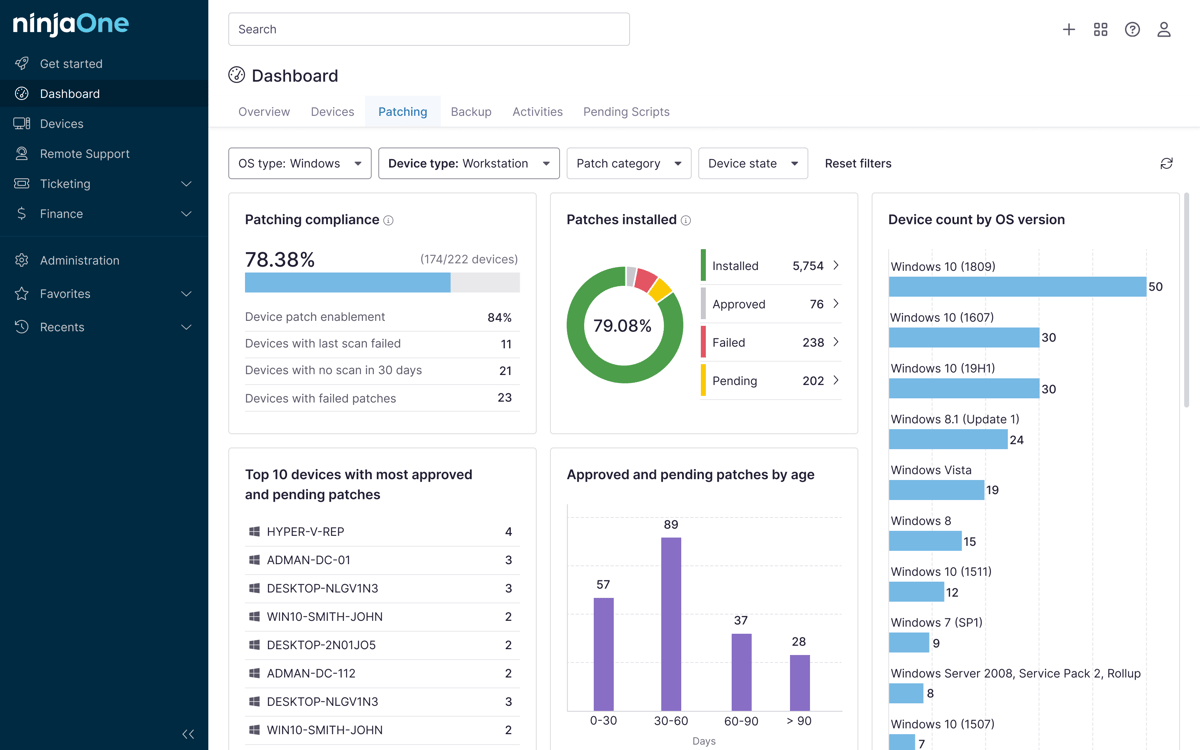
- Patching and vulnerability remediation: patch policy, dated compliance reports, failed-deployment records, and approved exceptions
- Policy enforcement: configuration baselines and records showing they are applied
- Access and remote support: access approvals and removals, privilege reviews, authentication settings, and relevant session or activity logs retained under an appropriate access and retention policy
- Backup and recovery: backup job histories and restore-test results
- Documentation: current network and system documentation, procedures, and ownership records
- Reporting: repeatable, dated reports rather than one-off screenshots
Where a unified IT operations platform can help
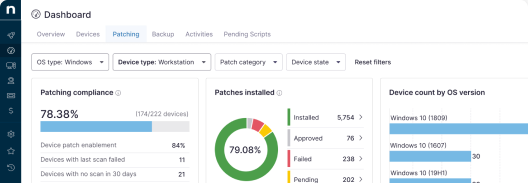
NinjaOne can support endpoint inventories, patch deployment and reporting, backup operations, remote access, and IT documentation. These capabilities can help internal IT teams, including enterprise teams, and MSPs maintain operational evidence. Coverage depends on the products deployed, supported systems, and configuration; map each report to a specific requirement and verify that it covers the intended scope.
Tooling supports controls and evidence. It does not grant, guarantee, or replace certification, which depends on your ISMS, your scope, and the audit process.
Common planning mistakes
- Unclear scope: an audit subject that is too broad, too narrow, or not agreed with stakeholders
- Stale inventories: modelling built on asset lists that no longer reflect reality
- Inconsistent evidence: reports with no date, owner, or source
- One-time thinking: treating certification as a project rather than an ongoing practice
- Confusing certification scopes: a supplier’s or MSP’s certificate does not automatically certify a customer environment; product certification also does not certify an organization’s ISMS
- Relying on secondary guidance: consultancy or vendor pages instead of current BSI material
Planning for Grundschutz++
As of October 2026, the BSI has published a Grundschutz++ methodology guide dated 1 April 2026 and describes a process-oriented approach with machine-readable requirements. The BSI states that existing IT-Grundschutz remains applicable during a multiyear transition.
Before committing to an initial or renewal audit, confirm with the BSI and your audit team leader which certification basis, document versions, and transition rules apply to your schedule. Keep inventories, risk decisions, ownership, and evidence traceable so they can support a future migration.