

Key Points
MSPs Struggle to Recruit Top Talent
Many Managed Service Providers (MSPs) face major hiring challenges — 75% cite staffing shortages as a barrier to growth in a competitive, remote-work market.
Traditional Recruiting Methods Fall Short
Standard job boards and listings attract active job seekers but miss the best candidates — those already employed and not actively searching.
Use a “Wanted Card” as a Recruiting Tool
Create a simple “Wanted” card that highlights the ideal candidate’s traits, skills, and your company culture. Share it with clients, vendors, and prospects to source high-quality referrals.
Turn Recruiting into a Sales Strategy
Asking clients and leads if they know great salespeople or techs not only uncovers talent but also reveals competitor relationships — giving your MSP a sales advantage.
Build a Continuous Hiring and Referral Pipeline
Recruiting should be ongoing, not reactive. Offer referral incentives and nurture relationships so you’re ready to hire top performers as soon as they become available.
In this case, R&D means “Ripoff and Duplicate”
Even in average economic times, hiring for technical roles is a competitive practice. In today’s candidate-driven market, flanked by labor shortages and the changes of remote work — hiring has become an extreme challenge while simultaneously being a top need for any growth-focused MSP.
In today’s MSP landscape, top technicians and sales professionals are in higher demand than ever. Managed Service Providers that win the talent game will ultimately win the growth game. To stand out, MSPs must treat recruiting like sales — proactive, relationship-driven, and continuous process.
Take a look at this data on the current hiring situation we gathered through polls from the audience who attended our recent MSP Live Chat:
- 75% of attendees said that a lack of staff is currently holding back the growth of their MSP business.
- A majority rated hiring as being extremely challenging over the past six months and said they anticipate hiring to be an extremely urgent need in 2022.
Our topic for the Live Chat was Finding & Hiring the Best Technicians, and one of our expert guest panelists was Mark Elliot, CRO of The 20. Mark offered his take on the state of MSP recruitment, and shared some of the secrets behind his hiring success at The 20 and in his other fast-growing IT businesses.
Automation and real-time visibility help MSPs standout in a crowded market.
You want “A” players, and that means you have to go get them
Everyone loves a good underdog story! Think of sports movies like Rudy or Moneyball, where an athlete or front office guy with legendary talent is identified from the most unlikely places and elevated to greatness. There’s a reason why the recruiters in these movies go to far-flung places like a decrepit steel mill in Joliet, Illinois, or an obscure economics classroom at Yale — they’re looking for talent where everyone else told them they wouldn’t find it.
Recruitment efforts at MSPs might not be as glamorous or gilded, but the same recruitment philosophy applies. Are you looking in those unexpected places for your next MVP?
Mark’s philosophy is that you can’t expect exceptional candidates to fall into your lap. During the live chat, he talked a lot about how most MSPs are fishing in the same pond for new talent. When you confine your searches to looking through resumes on sites like Indeed you’re dealing with what Mark called “the froth at the top.” Or people who are professional interviewers with flashy resumes, but lack the real-world experience to back it up.
There’s also the simple fact that rockstar talent typically don’t have to advertise that they’re looking — the vast majority of the time you have to poach them. That means, to find that next MVP technician, you have to go beyond the typical job postings and platforms. You have to reach out, make connections, and build a relationship over time, so when the timing is right and they’re ready to make a move you’re there and you’ve already built rapport with them.
But how do you find rock star tech talent and make those introductions? Well, how do you often get your best clients?
Referrals, right? Yes, referrals are great, but the problem with them is that they’re a limited resource in your market and easily exhaustible.
Luckily for us, Mark has a solution to make talent referrals a bit more evergreen.
Mark’s secret hiring weapon: “Wanted” cards
During our chat, Mark shared an actionable tactic around creating a referral program in the spirit of a wild west-style “wanted” ad.
If you don’t know what a wanted ad is or what they look like, Mark brought one along with him to our latest live chat.

The process of building a “wanted ad” is very straightforward; the card lists off desired personal traits and some technical or experienced-based qualifications that are desired by the hiring MSP, including things like:
- Goal-oriented, multi-tasker, self-motivated
- Successful track record of selling IT services
- Team player with a positive outlook
- Knows how to build relationships and close deals
[see Mark walk through exactly what was on his wanted card on the MSP Live Chat]
When looking for top sales talent, Mark distributes his wanted cards to prospects and clients during sales calls — he may ask a prospect if they’ve spoken to any outstanding sales reps lately or a client if they’ve worked with any top notch account managers from their vendors. This gives Mark a unique recruiting insight into great sales talent that might not be actively searching for a new role, but is still that top tier talent he’s looking for.
Mark then takes those names, makes a list, and starts dialing down. To make his calls less recruiting-centric, Mark lets them know that he’s reaching out because one of his clients referred them and that he’s just looking to get a cup of coffee and learn more about other talented folks in the industry.
On top of this, Mark offers a reward of $5000 for successful hires. In the case of a sales role he’ll offer the referring party a $250 gift card to the store of their choice. Once the sales rep has generated their first 100k in gross profit he follows up with an additional $4,750 check to them or the charity of their choice. The prize numbers aren’t necessarily important, but the sentiment of rewarding folks that refer good talent to your business is.
To round things out a bit, the back of the card has his company’s core values on them. This helps the referring party quickly outline what the company stands for and how they operate.
Pro Tip: Include a small QR code on your wanted card that links to your careers page or a short video about your company culture. This creates a memorable touchpoint and makes it easy for referrals to act immediately.
If the core values and traits outlined on the card aren’t a perfect match, it’s pretty clear that it won’t be a good fit. Removing that ambiguity in the referral process is a great way to prevent wasted time in the interviewing process.
Bonus: This doubles as a sales tactic, too
Not only does this tactic help Mark identify the best technicians, salespeople, and account managers in his area, it also helps him understand whom he’s up against in any given deal.
This referral ask with prospects is a powerful double edged sword. On one side you’re looking for good talent recommendations and on the other you’re gaining direct insight into who else the prospect is talking to for managed services.
Guising the referral ask as a way of figuring out who else a prospect is talking to is a less awkward way of finding out who your competition is in a multiple-bids situation. You may also find out that the prospect isn’t mulling services from anyone else because they can’t offer a referral from a recent conversation.
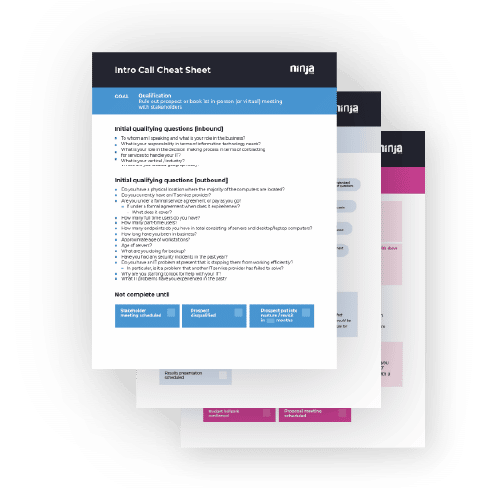
Every MSP hopes to know who their local competitors are. In the same spirit as the wanted ad we covered above, you can develop basic talking points that frame the comparison between you and competitor A, B, or C in a favorable light.
This doesn’t mean that you should be ready to throw mud (that rarely comes across well), but simply outlining compelling reasons for why companies like the prospect you’re talking with ultimately choose you.
You can use the same format as the wanted card Mark mentioned above. Conversely, you can turn the wanted card into a battle card like we covered on our MSP Live Chat aired on September 2nd on Winning Competitive Deals.
Looking for new and creative ways to reach prospects?
Closing
Exceptional hires don’t fall from the sky, or a list of free resumes emailed to you by indeed. Even when your current employment needs aren’t clear, you should always be recruiting and developing new relationships with the top talent in your immediate area.
Over the past year, the pandemic has compelled us to think creatively about how we operate apply the same innovative approach to recruitment and hiring. The old and tired recruitment tactics of yesteryear won’t help you or your business stand out while laying the groundwork to hire top tech talent.
Considering how challenging and how important hiring is, the effort and investments in it today will be worth it tomorrow.
Additional resources to help your MSP
For a more resources on hiring, winning in competitive situations, and actionable sales tactics, see the following:
- MSP Live Chat | Finding and Hiring The Best Techs
- Blog | Winning Competitive MSP Deals: 3 Strategies To Keep You Ahead
- Downloadable Guide | MSP Sales Process Guide and Checklists
Note: Our Live Chats are even better live! Find out when we’re hosting our next one, and be part of the conversation.

View the full discussion in the video below: