KB5082420: Overview with user sentiment and feedback
Last Updated May 30, 2026
Probability of successful installation and continued operation of the machine
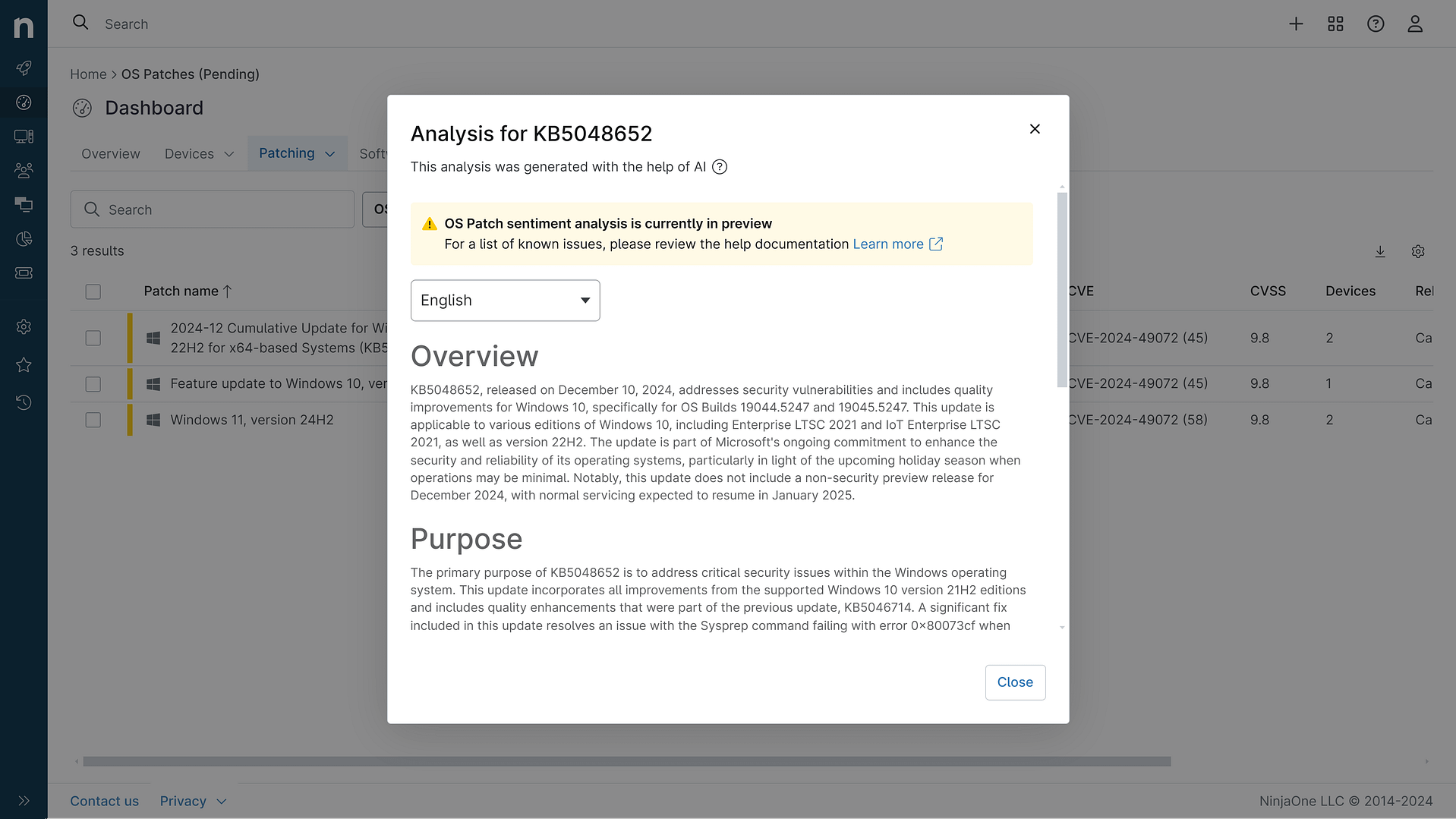
Overview
KB5082420 is a cumulative security and reliability update released on April 14, 2026, targeting .NET Framework versions 3.5 and 4.8.1 on Windows 11 version 24H2 systems. This patch represents Microsoft's commitment to maintaining the security posture and operational stability of the .NET Framework ecosystem across current Windows 11 installations. The update addresses multiple security vulnerabilities spanning remote code execution, denial-of-service, security feature bypass, and information disclosure categories, alongside quality improvements to Windows Communication Foundation (WCF) functionality.
The patch is distributed through standard Microsoft update channels including Windows Update, Windows Update for Business, Microsoft Update Catalog, and Windows Server Update Services (WSUS), ensuring broad accessibility across enterprise and consumer environments. Microsoft explicitly recommends applying this update as part of regular maintenance routines, indicating the importance of the security fixes contained within. The update requires systems to have either .NET Framework 3.5 or 4.8.1 already installed and necessitates a system restart following installation.
General Purpose
This cumulative update delivers six distinct security vulnerability remediations for the .NET Framework. The most critical fix addresses CVE-2026-32178, a remote code execution vulnerability that could allow attackers to execute arbitrary code through compromised .NET applications. Additional security improvements target three separate denial-of-service vulnerabilities (CVE-2026-32203, CVE-2026-32226, and CVE-2026-23666) that could enable attackers to disrupt service availability. The patch also resolves CVE-2026-26171, a security feature bypass vulnerability, and CVE-2026-33116, an information disclosure vulnerability that could expose sensitive system information. Beyond security enhancements, the update includes a quality improvement specifically addressing Windows Communication Foundation (WCF) NamedPipe service execution within Win32 application containers on Windows 11 and Windows Server 2025 environments, resolving operational issues that could impact legacy application functionality.
General Sentiment
The sentiment surrounding KB5082420 is overwhelmingly positive from a security perspective, as it addresses multiple critical vulnerability classes without reported user complaints or compatibility concerns. The patch demonstrates Microsoft's proactive security maintenance approach with six CVE remediations in a single update, particularly noteworthy given the inclusion of a remote code execution fix. The inclusion of a WCF-specific quality improvement suggests Microsoft has addressed real-world operational issues reported by users, indicating responsiveness to community feedback. However, some considerations warrant mention: the patch requires a system restart, which may impact business continuity in environments with strict uptime requirements. Additionally, users must ensure .NET Framework-based applications are properly closed before installation to prevent file-in-use conflicts. The straightforward deployment through standard Windows Update channels minimizes friction for most users. No documented user complaints, compatibility issues, or adverse post-installation effects have emerged from available sources, suggesting a smooth rollout experience.
Known Issues
- Microsoft has not identified any known issues with this update at the time of release.
Disclaimer: We take measures to ensure that AI-generated content is of the highest possible quality, but we cannot guarantee its accuracy and recommend that users do their own independent research. Generated on 2026-05-30 07:47 PM