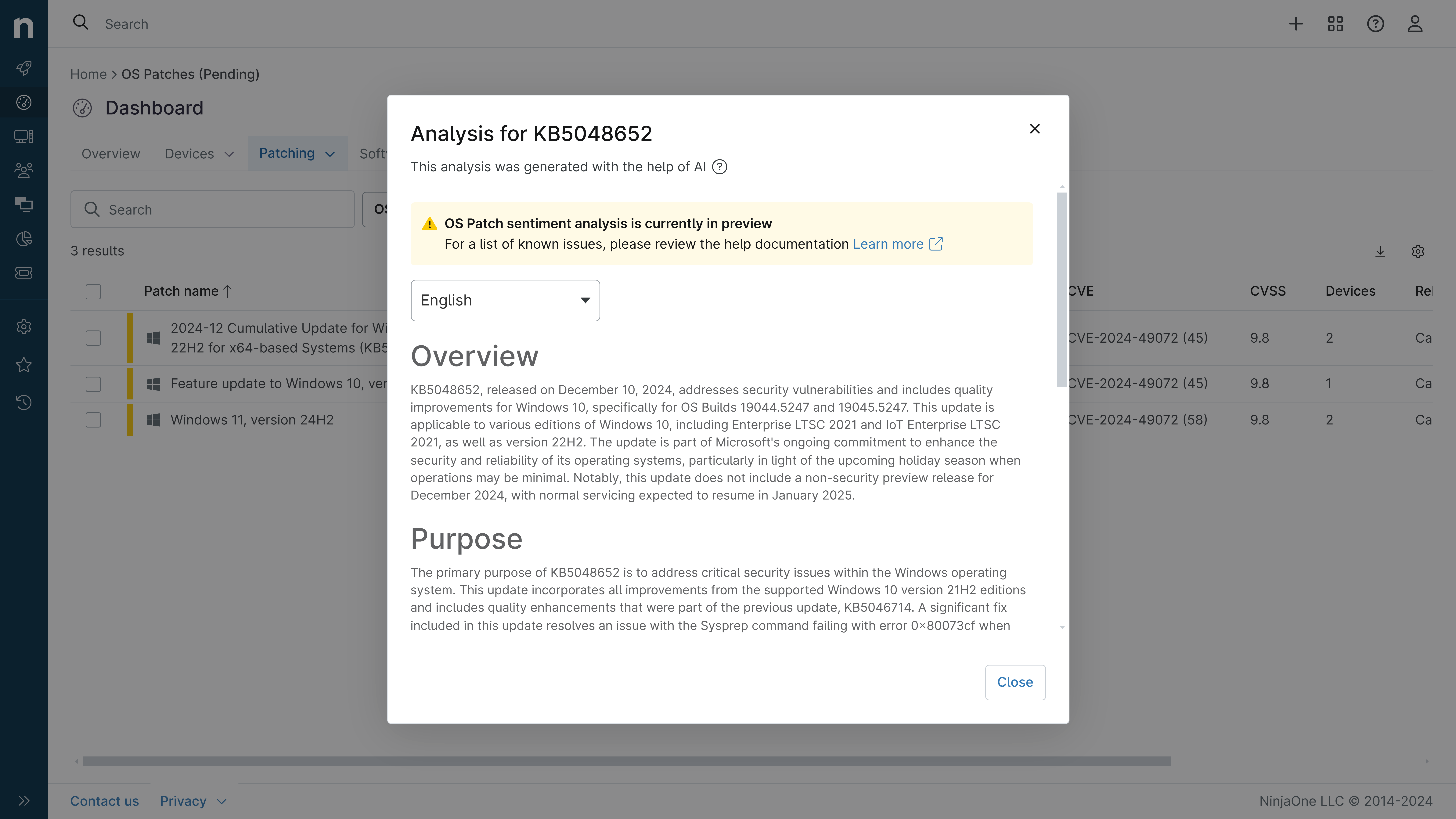
KB5082419: Overview with user sentiment and feedback
Last Updated May 29, 2026
Probability of successful installation and continued operation of the machine
Overview
KB5082419 is an April 2026 cumulative update addressing security and reliability improvements for .NET Framework 3.5 and 4.8.1 across Windows 10 Version 21H2 and Version 22H2. This update was initially released on April 14, 2026, and subsequently revised on April 22, 2026, to incorporate a known issues section. The patch targets critical vulnerabilities within the .NET Framework runtime environment and related components, making it part of Microsoft's standard monthly security maintenance cycle. The update is distributed through multiple channels including Windows Update, Microsoft Update, and the Microsoft Update Catalog, ensuring broad availability to affected systems. Organizations and individual users running the specified Windows 10 versions with .NET Framework dependencies should consider this update as part of their regular patch management procedures.
General Purpose
This cumulative update delivers six critical security fixes addressing remote code execution, denial-of-service, security feature bypass, and information disclosure vulnerabilities within .NET Framework. The most significant security improvement addresses CVE-2026-32178, a remote code execution vulnerability that could allow attackers to execute arbitrary code through compromised .NET Framework processes. Additionally, the patch resolves four denial-of-service vulnerabilities and one security feature bypass vulnerability that could impact system availability and security posture. Beyond security enhancements, the update includes quality and reliability improvements to the .NET Runtime, specifically adding verification logic for ClickOnce to support SHA384 and SHA512 cryptographic algorithms, and addressing a critical issue where ARM64 CLR could crash when handling NullReferenceExceptions within the same function. The patch also resolves a Windows Communication Foundation (WCF) issue affecting NamedPipe services running inside Win32 app containers on Windows 11 and Windows Server 2025 environments.
General Sentiment
The update presents a balanced security posture with strong justification for deployment. The inclusion of multiple critical security vulnerabilities, particularly the remote code execution flaw, underscores the importance of timely installation. However, the presence of a documented known issue regarding DISM installation failures on Windows 10 IoT Enterprise LTSC 21H2 offline images introduces a caveat for certain deployment scenarios. The fact that Microsoft acknowledged this issue and committed to a resolution in a future update demonstrates transparency, though it may delay deployment for organizations using offline imaging processes. For standard Windows Update and online deployment scenarios, the update appears well-vetted. The quality improvements addressing ARM64 CLR crashes and WCF NamedPipe services suggest Microsoft addressed real-world issues reported by users. Community sentiment is likely to be positive given the security-critical nature of the vulnerabilities addressed, though organizations managing offline deployments or using IoT Enterprise editions should exercise caution and consider timing their deployment after the planned fix becomes available.
Known Issues
- Installation failure when applied through DISM to offline Windows 10 IoT Enterprise LTSC 21H2 images; Microsoft is working on a resolution with a fix planned for inclusion in an upcoming .NET Framework update
Disclaimer: We take measures to ensure that AI-generated content is of the highest possible quality, but we cannot guarantee its accuracy and recommend that users do their own independent research. Generated on 2026-05-29 07:36 PM