KB5082411: Overview with user sentiment and feedback
Last Updated May 31, 2026
Probability of successful installation and continued operation of the machine
Overview
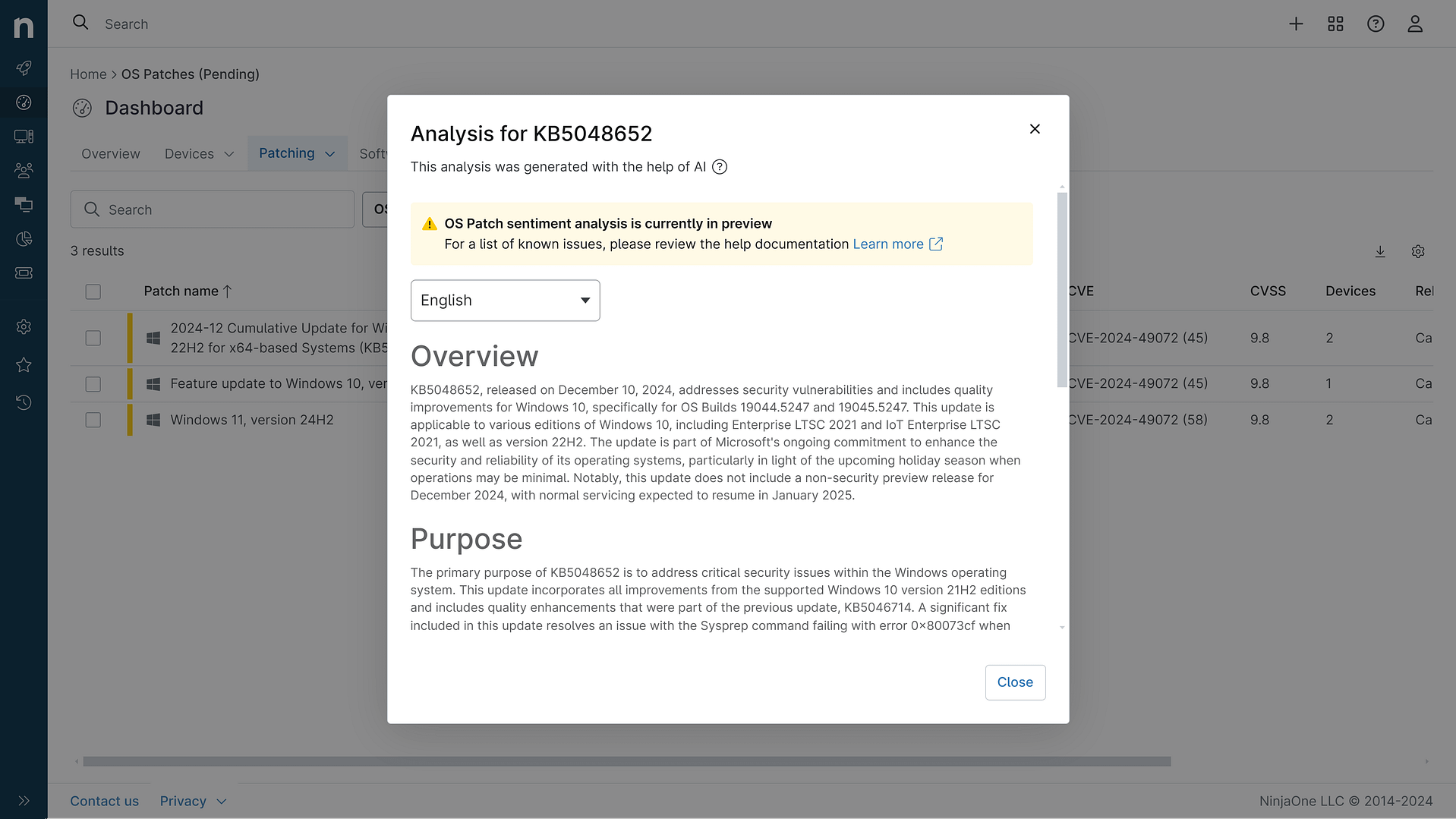
KB5082411 is a cumulative security and reliability update for .NET Framework 4.8 released on April 14, 2026, targeting Windows 10 version 1607 and Windows Server 2016 systems. This patch addresses multiple critical security vulnerabilities within the .NET Framework runtime environment, alongside quality improvements to enhance system stability and reliability.
The update is distributed through standard Microsoft channels including Windows Update, Windows Update for Business, Microsoft Update Catalog, and Windows Server Update Services (WSUS). Microsoft recommends applying this update as part of regular maintenance routines to ensure systems remain protected against identified threats. The patch requires .NET Framework 4.8 to be pre-installed and necessitates a system restart following installation.
General Purpose
This cumulative update delivers six distinct security vulnerability remediations for the .NET Framework 4.8 runtime. Most critically, it addresses CVE-2026-32178, a remote code execution vulnerability that could allow attackers to execute arbitrary code on affected systems. Additionally, the patch resolves multiple denial-of-service vulnerabilities (CVE-2026-32203, CVE-2026-32226, and CVE-2026-23666) that could enable attackers to disrupt service availability. The update also patches CVE-2026-26171, a security feature bypass vulnerability, and CVE-2026-33116, an information disclosure vulnerability that could expose sensitive system data. Beyond security fixes, the patch includes a quality improvement to the .NET Runtime that adds verification logic for ClickOnce deployments, enabling support for SHA384 and SHA512 cryptographic algorithms, which strengthens the integrity verification capabilities of application deployment mechanisms.
General Sentiment
The sentiment surrounding KB5082411 is decidedly positive, as the patch addresses a significant remote code execution vulnerability alongside multiple additional security threats. The inclusion of six distinct CVE remediations demonstrates Microsoft's commitment to securing the .NET Framework ecosystem. The quality improvement for ClickOnce SHA384 and SHA512 support represents forward-thinking enhancement for modern cryptographic standards. Microsoft's explicit statement that no known issues have been identified in this update further reinforces confidence in its deployment. The patch's availability through multiple distribution channels ensures broad accessibility for both enterprise and individual users. However, potential concerns exist regarding the requirement for a system restart and the recommendation to exit all .NET Framework-based applications before installation, which may necessitate planned maintenance windows in production environments. The targeting of older operating systems (Windows 10 version 1607 and Windows Server 2016) suggests this update is critical for users still operating on legacy infrastructure who may have delayed migration plans.
Known Issues
- Microsoft has not identified any known issues associated with this update at the time of release
Disclaimer: We take measures to ensure that AI-generated content is of the highest possible quality, but we cannot guarantee its accuracy and recommend that users do their own independent research. Generated on 2026-05-31 01:46 PM