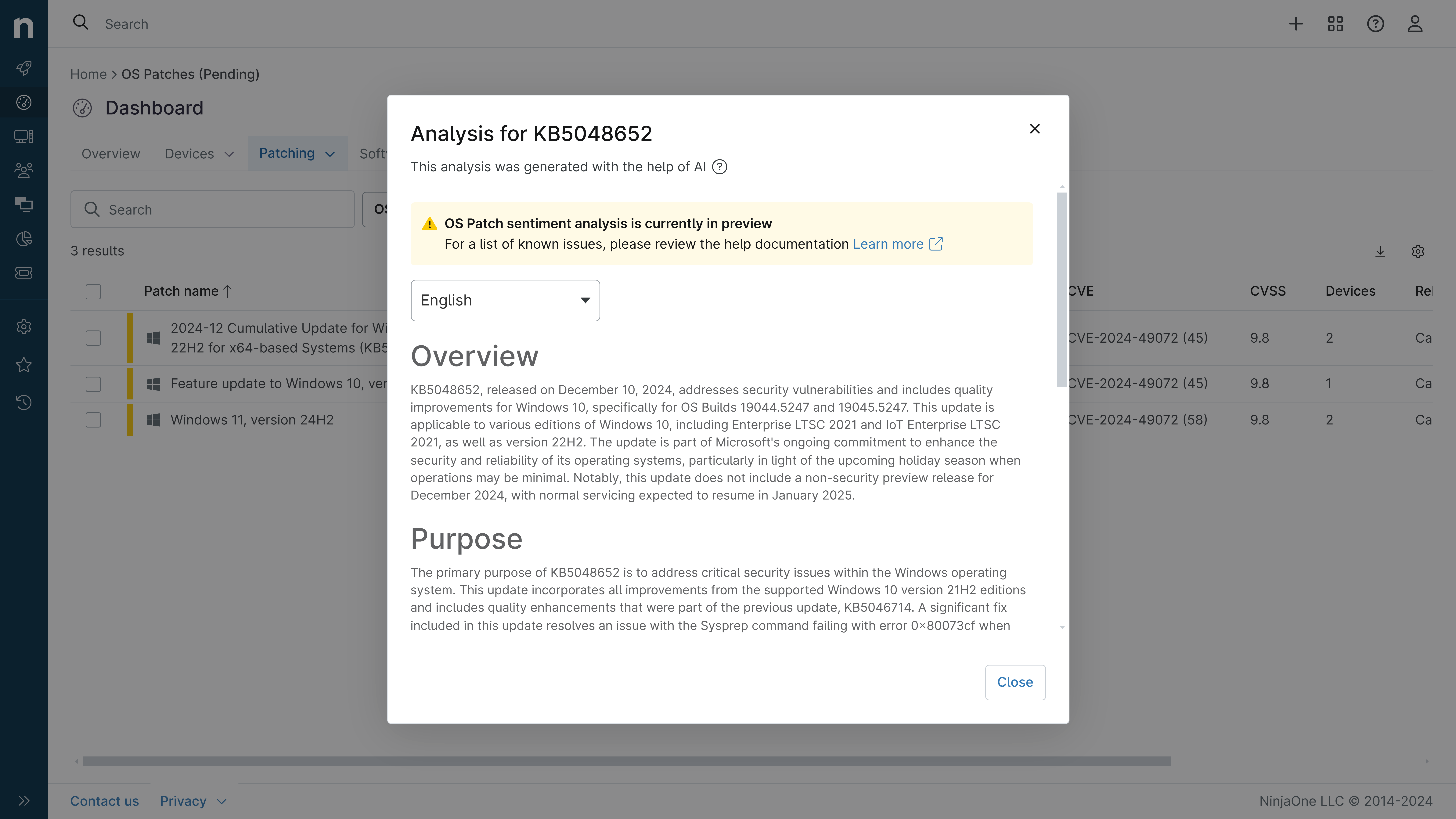
KB5082403: Overview with user sentiment and feedback
Last Updated May 29, 2026
Probability of successful installation and continued operation of the machine
Overview
KB5082403 is an April 2026 Security and Quality Rollup for .NET Framework 4.8 specifically designed for Windows Server 2012 systems. This update represents a cumulative security and reliability improvement package that addresses multiple critical vulnerabilities within the .NET Framework runtime environment. The patch is part of Microsoft's Extended Security Updates (ESU) program, which provides continued security coverage for Windows Server 2012 beyond its standard end-of-support date of October 10, 2023. Organizations running legacy Windows Server 2012 infrastructure that have purchased ESU licenses can continue receiving security patches through October 13, 2026, with this rollup being one of the regular monthly security releases in that program.
The update encompasses six distinct security vulnerabilities ranging from remote code execution threats to denial-of-service attacks, along with quality improvements to the .NET runtime. Given that Windows Server 2012 reached end-of-support over two years ago, this patch is particularly important for organizations that have not yet migrated to newer Windows Server versions but require ongoing security maintenance. The rollup also addresses a specific quality issue related to ClickOnce deployment verification logic to support modern cryptographic hash algorithms.
General Purpose
This security and quality rollup addresses six identified security vulnerabilities in .NET Framework 4.8 on Windows Server 2012. The most critical vulnerability (CVE-2026-32178) is a remote code execution flaw that could allow attackers to execute arbitrary code through the .NET Framework. Additionally, the update patches four denial-of-service vulnerabilities (CVE-2026-32203, CVE-2026-32226, CVE-2026-23666) that could be exploited to disrupt service availability, and one security feature bypass vulnerability (CVE-2026-26171) that could undermine security mechanisms. An information disclosure vulnerability (CVE-2026-33116) is also addressed, which could expose sensitive data. Beyond security fixes, the rollup includes a quality improvement to the .NET runtime that adds verification logic for ClickOnce deployments, enabling support for SHA384 and SHA512 cryptographic hash algorithms. This enhancement ensures compatibility with modern security standards for application deployment scenarios. The update requires .NET Framework 4.8 to be pre-installed and recommends installation of the latest Servicing Stack Update (KB5044413) beforehand to ensure reliable installation.
General Sentiment
The sentiment surrounding this patch is cautiously positive from a security perspective, as it addresses multiple significant vulnerabilities including a critical remote code execution flaw. However, the context is somewhat negative given that it applies only to Windows Server 2012, an operating system that reached end-of-support over two years ago. Microsoft's official documentation explicitly recommends that organizations upgrade to a later version of Windows Server rather than continue patching legacy systems. The patch itself appears well-tested, with Microsoft reporting no known issues at the time of release, which is a positive indicator. The requirement for Extended Security Updates licensing may create friction for some organizations, as this is not a standard update but rather a paid service. From a technical standpoint, the inclusion of quality improvements alongside security fixes demonstrates a comprehensive approach to maintenance. However, the fact that this patch is necessary at all underscores the ongoing security risks associated with maintaining legacy infrastructure. IT professionals should view this as a necessary interim measure for systems that cannot be immediately upgraded, but not as a long-term security strategy.
Known Issues
- Microsoft is not currently aware of any issues with this update at the time of release
- Installation may fail on Azure Arc-enabled devices running Windows Server 2012 unless specific network endpoint requirements are met; administrators should verify connectivity to the subset of ESU-only endpoints as documented in Connected Machine agent network requirements
- Language packs installed after this update will require the update to be reinstalled; therefore, language packs should be installed prior to applying this patch
- System restart may be required if affected files are currently in use; all .NET Framework-based applications should be closed before installation
Disclaimer: We take measures to ensure that AI-generated content is of the highest possible quality, but we cannot guarantee its accuracy and recommend that users do their own independent research. Generated on 2026-05-29 07:53 PM